

Silk Road Motorcycle Tour –
Overland Motorbike Adventure From Munich to Tibet
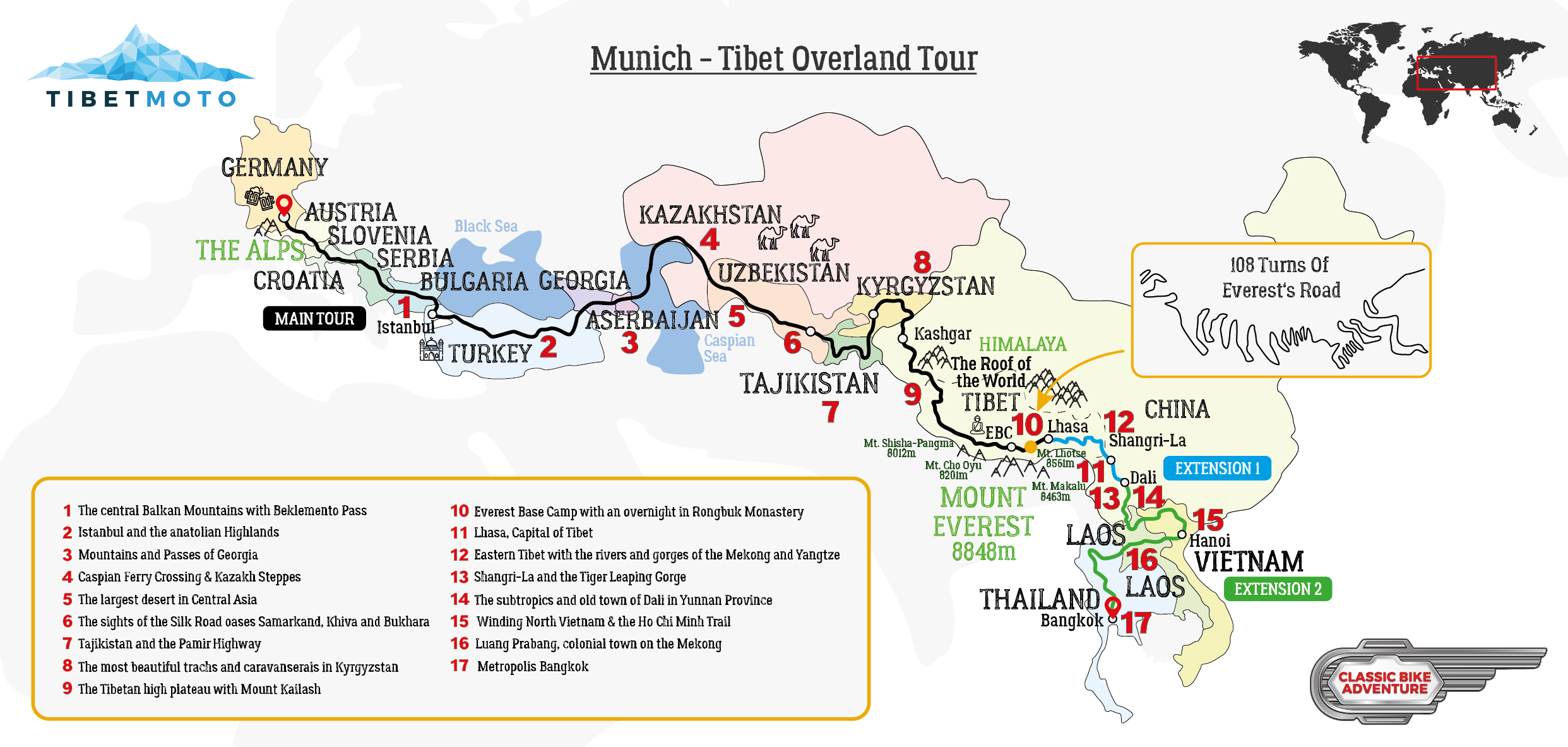
This superlative motorcycle adventure takes you along the Silk Road from Munich to Lhasa, through 14 countries, over 12,500 kilometers, and through the continents of Europe and Asia. EurAsia and the journey along the Silk Road to the roof of the world in Tibet are the route and the destination of this spectacular journey, which connects numerous highlights of the historical and modern Silk Road. The first few days lead through little-known regions of Eastern Europe with the romantic capital Ljubljana, the ex-Soviet backdrop of Belgrade and the Beklemento Pass deep in the Balkan Mountains in Bulgaria. After reaching the Black Sea coast, we enjoy Istanbul, the city that connects the two continents of Europe and Asia. Here we enjoy a free day and then take the ferry to Asia.
We climb the Anatolian highlands, follow the Silk Road and spend the night in historic UNESCO World Heritage sites before driving through the passes and remote country roads of Georgia. The route leads us through Georgia’s forested mountain ranges and rolling steppe, crossing the Caucasus into Azerbaijan. Ahead lies the Caspian Sea, where an overland highlight awaits: the ferry crossing to Kazakhstan, linking the Caucasus with the vast landscapes of Central Asia. We follow the Silk Road to Khiva, Bukhara and Samarkand in Uzbekistan – the pearls of the oriental Silk Road with their numerous cultural and historical sights.
Read more
From Samarkand, our Silk Road motorcycle tour continues to Tajikistan, where we reach the capital Dushanbe – the gateway to the famous Pamir Mountains. Over the spectacular Pamir Highway, the mother of all adventure trails in Central Asia, with its high passes and sparsely populated mountains, we proceed to Kyrgyzstan. Beautiful Kyrgyz trails make each day a highlight; we stay in homestays with friendly locals and in yurt camps – remnants of the historic caravanserais of the Silk Road. Over the breathtaking nearly 4,000-meter-high Torugart Pass, we approach our destination: Tibet. A long day’s ride along the Taklamakan, the “Desert of No Return,” brings us to the foothills of the Kunlun Mountain range before we ascend to the Tibetan Plateau: 5,000-meter-high passes need to be crossed.
We travel across the Roof of the World from west to east, pausing at the holy Mount Kailash for Buddhists and Hindus, which is beneficial for our karma, and hike a part of the way with Tibetan pilgrims. The seemingly endless shores of Lake Manasarovar, not far from Kailash, with its monasteries, nomads, and hermitages, bring us closer to Tibetan culture and religion. Then we reach the Rongbuk Monastery at the world’s highest mountain, Everest. At 5,200 meters, we enjoy one of the most spectacular views on Earth, looking at Everest and the curviest roads and passes in all of Asia stretching out before us.
Along turquoise salt lakes, glaciers, and historical monasteries and Tibetan cultural sites, we reach mystical Lhasa, where the main part of the journey ends. Here, we wander with hundreds of Tibetan pilgrims through the old town at Barkhor Market and visit the former seat of the Dalai Lama, the iconic and world-famous Potala Palace. On the optional extension through the Eastern Himalayas and eastern Tibet, we head into the subtropical province of Yunnan, which translates to “South of the Clouds.” The mighty rivers Yangtze, Mekong, and Salween await us with winding routes and spectacular gorge landscapes.
This route was closed to foreigners for many years and offers entirely new Himalayan landscapes, historical sites of Chinese culture, and curvy riding fun from the heights of the Himalayas down to China’s tea-growing areas and fertile valleys. The journey takes us through the Tiger Leaping Gorge, one of the deepest gorges in the world, and ends in Dali after visiting the UNESCO World Heritage city of Lijiang.From either Lhasa or Dali, we return home. Our local team takes care of shipping the motorcycles back. The tour is jointly organized by Classic Bike Adventure and Tibetmoto, the Tibet expert.
You can also join us on our Mongolia Motorcycle Tour and ride through Mongolia’s iconic landscapes – endless steppe, peaceful taiga forests, remote lakes and vast mountain ranges, combined in one unforgettable motorcycle adventure.
We also organise the North Vietnam Motorcycle Tour and Northern Thailand Motorcycle Tours with Golden Triangle Loop Tour on Royal Enfield Bikes . In case you are looking for a himalayan adventure along snow capped mountains and beautiful lakes we have the Ladakh 3 Lakes Motorcycle tour with Umling La, Khardung La and Mig La Pass.
Motorcycle Tours Along China Silk Road – AT A GLANCE
 |
Date 1 Date 2 |
||||||
 |
|
||||||
 |
Main tour With Extension 1 to Dali With Extension to Bangkok |
||||||
 |
Overnight stays in middle-class hotels, guest houses and simple accommodations. |
|
Date 1 – Spring/Summer Tour Date 2 – Summer Tour |
||||||
|
|
||||||
|
Main tour With Extension 1 to Dali With Extension to Bangkok |
||||||
|
Overnight stays in middle-class hotels, guest houses and simple accommodations. |
|
Date 1 – Spring/Summer Tour Date 2 – Summer Tour Date 3 – Autum Tour |
||||||
|
|
||||||
|
Main tour With Extension 1 to Dali With Extension to Bangkok |
||||||
|
Overnight stays in middle-class hotels, guest houses and simple accommodations. |
|
Date Date 2 |
|
Price Main tour: Biker with own motorcycle: 15.980€ Pillion: 7.980€ Single Room: +1.480€ Extension 1: Biker with own motorcycle: 2.990€ Pillion: 1.990€ Single Room: +390€ Extension 2: Biker with own motorcycle: 5.990€ Pillion: 3.890€ Single Room: +990€ |
|
Duration 49 days / 48 nights / 39 riding days With Extension 1 to Dali: 55 Days With Extension to Bangkok: 80 Days |
|
Acoomodation Overnight stays in middle-class hotels, guest houses and simple accommodations. |
|
Date Date 1 – Spring/Summer Tour Main tour: 28.04. – 18.06. Extension 1: 17.06. – 24.06. Extension 2: 25.06. – 19.07. Date 2 – Summer Tour |
|
Price Extension 1: |
|
Duration 52 days / 51 nights With Extension 1 to Dali: 58 Days With Extension to Bangkok: 83 Days |
|
Accomodation Overnight stays in middle-class hotels, guest houses and simple accommodations. |
|
Date Date 2 – Summer Tour Date 3 – Autum Tour |
|
Price Extension 1: |
|
Duration 49 days / 48 nights / 39 riding days With Extension 1 to Dali: 55 Days With Extension to Bangkok: 79 Days |
|
Acoomodation Overnight stays in middle-class hotels, guest houses and simple accommodations. |
Silk Road Motorcycle Tour – Highlights
- 14 Countries from Munich, Germany to Lhasa, China and Over 12,500 Kilometers: An adventure of a lifetime, covering all the highlights of the Silk Road up to Tibet, the Roof of the World.
- Central Balkan Mountains: Experience the Beklemento Pass.
- Istanbul & Anatolian Highlands: Visit the Silk Road towns of Safranbolu and Amasya.
- Caspian Sea Ferry Crossing & the steppes of Kazakhstan
- Crossing the Largest Desert in Central Asia: Journey through vast desert landscapes.
- Time for All Attractions: Sufficient time to explore the Silk Road oases of Samarkand, Khiva, Bukhara, and Dushanbe.
- Tajikistan and the World-Famous Pamir Highway: Ride through stunning high mountain passes.
- Kyrgyzstan’s Beautiful Trails and Caravanserais: Discover the charm of Kyrgyzstan’s historic routes.
- Tibet from West to East: Including all highlights of the Tibetan Himalayas, such as Lake Manasarovar, the sacred Mount Kailash, Everest Base Camp, Yamdrok Lake, Xigaze, and Lhasa.
- Everest Base Camp: Spectacular views of Everest from an altitude of 4,900 meters.
- One of the World’s Most Spectacular Roads: Experience breathtaking views of the highest mountains on Earth from the Everest Base Camp.
- Full Days in Istanbul, Samarkand, and Lhasa: Enjoy city tours and cultural explorations.
- Regular Rest Days: For relaxation and sightseeing.
- Proven and Current Route Guidance: Our team has successfully conducted this tour many times.
- Support Vehicle: For passengers and luggage, as well as emergency assistance.
- Mechanic Service: Available throughout the journey.
- Return Shipping of Motorcycles Included: No extra costs for shipping your bike back home.
- Local Guides in Many Countries: Providing the best insights into local cultures.
- Optional extension to Dali
- Optional extension to Bangkok


The route is mostly well-maintained and paved. Two-lane roads alternate with small, sometimes single-lane mountain roads. Drivers should be accustomed to safely navigating hairpin turns and narrow, quickly changing curves. Highways are not taken.
Some sections, up to full day stages, are unpaved. In addition to good gravel roads, some stretches may have potholes and bumps. Certain areas may be covered with sand or pebbles, and there are moderate inclines on unpaved road surfaces. The off-road/paved ratio is approximately 20/80.
Including breaks, photo stops, and sightseeing, but excluding a lunch break, which lasts about one hour. On regular days, we start in between 8-9am and arrive at the tour hotel in the afternoon. Average times: Approximately 6-7 hours per day
Munich to Lhasa




Lhasa to Dali





Silk Road Motorcycle Tour – Main Tour – Munich to Tibet – Itinerary
Day 1: Meeting in Munich
Meeting of tour participants near Munich. Detailed tour briefing in the afternoon. Get to know each other over dinner in Munich.

Day 2: Munich – Ljublijana
From Munich, we traverse the eastern Alps and find ourselves in the small, beautiful capital of Slovenia. The old town, built right along the Sava River, exudes charm, making it a perfect place for a relaxed start to our journey. We enjoy a stroll through the old town and have dinner at the foot of Ljubljana Castle.
Distance: approx. 400 km, Slovenia
Day 3: Ljubljana – Belgrade
We traverse the rugged and arid Croatian hinterland and reach Serbia, the first country outside the EU on our journey. Belgrade is a remarkable city that has reestablished itself in Europe following Soviet occupation. Architecture enthusiasts will find much to admire here, as few places showcase Soviet grandeur alongside buildings from various other eras. The city is situated at the confluence of the Sava and Danube rivers, with the Belgrade Fortress overlooking the beautiful old town.
Distance: approx. 530 km, through Croatia and Serbia

Day 4: Belgrade – Sofia
Departing from Belgrade, the route heads south through the Morava Valley. Wide plains and gentle hills accompany the road all the way to the Bulgarian border.
After crossing into Bulgaria, the landscape gradually becomes more mountainous before the basin of Sofia opens up. The Bulgarian capital, located at the foot of the Vitosha Mountains, marks the destination of this cross-border stage.
Distance: approx. 400 km, Bulgaria
Day 5: Sofia – Burgas
Leaving Sofia, the route continues eastward through the interior of the country. The group crosses the Balkan Mountains before following broad plains toward the Black Sea. As the coast approaches, the atmosphere noticeably shifts. Burgas, situated directly on the Black Sea, marks the end of this stage and introduces a first maritime element on the journey southeastward.
Distance: approx. 430 km

Day 6: Burgas – Istanbul
Today, we explore the central Balkan Mountains, which gave the entire region its name. Rising over a thousand meters above Bulgaria, we have an incredible view of the vast landscape from the Beklemento Pass (1,520 m). Beautiful curves lead us back down as we continue our journey through the Bulgarian hinterland, heading east to the Black Sea and the town of Sozopol. The region around Sozopol originated from the Greek colony of Apollonia and is one of the oldest cities in Bulgaria, with a history spanning over 3,500 years. We spend the rest of the day relaxing on the beach or exploring the peninsula of Sozopol.
Distance: approx. 390 km
Day 7: Istanbul
A day to explore Istanbul begins with a three-hour guided tour in the morning. We visit the modern metropolis on the Bosphorus and soak in the unique atmosphere of this remarkable city. Our itinerary includes the Hagia Sophia, the spectacular old town, and the bustling bazaar.

Day 8: Istanbul – Safranbolu
The Mediterranean charm of the Bosphorus slowly gives way to an alpine mountain landscape as we penetrate the northern Anatolian highlands and follow the ancient Silk Road. Safranbolu, known for its beautiful cityscape filled with half-timbered houses, has been a UNESCO World Heritage site since 1994. Here, one can experience the authentic Turkey, with narrow streets lined with small restaurants and artisans selling their crafts. In traditional hamams, men can relax and enjoy a Turkish steam bath. As the name suggests, saffron was once traded in this Silk Road town.
Distance: approx. 410 km
Day 9: Safranbolu – Amasya
Winding roads lead us to Amasya, a town nestled in the hinterland of the Black Sea coast within the Pontic Mountains, situated in a narrow valley right by the river. The main part of this charming city stretches along the east side of the river, while only a few rows of houses lie at the foot of the steep castle hill on the west side. Five bridges connect the two halves of the city, inviting visitors to linger and explore. In the rocks above the city, tomb chambers were built during the Hellenistic period, reminiscent of Greek architecture. These tombs can be visited today. In the evening, Amasya has a special charm as the old town is beautifully illuminated.
Distance: approx. 390 km

Day 10: Amasya – Bayburt
Continuing eastward, we follow the North Anatolian Fault. Through the idyllic steppe landscape, we journey further until we reach Bayburt, a city situated in the Anatolian highlands.
Distance: approx. 450 km
Day 11: Bayburt – Savsat
A beautiful winding mountain road takes us to Şavşat, located in the far east of Turkey near the Georgian border. Here, we stay overnight in the wooded hills, in bungalows that offer stunning views.
Distance: approx. 350 km

Day 12: Savsat – Alkhaltsikhe
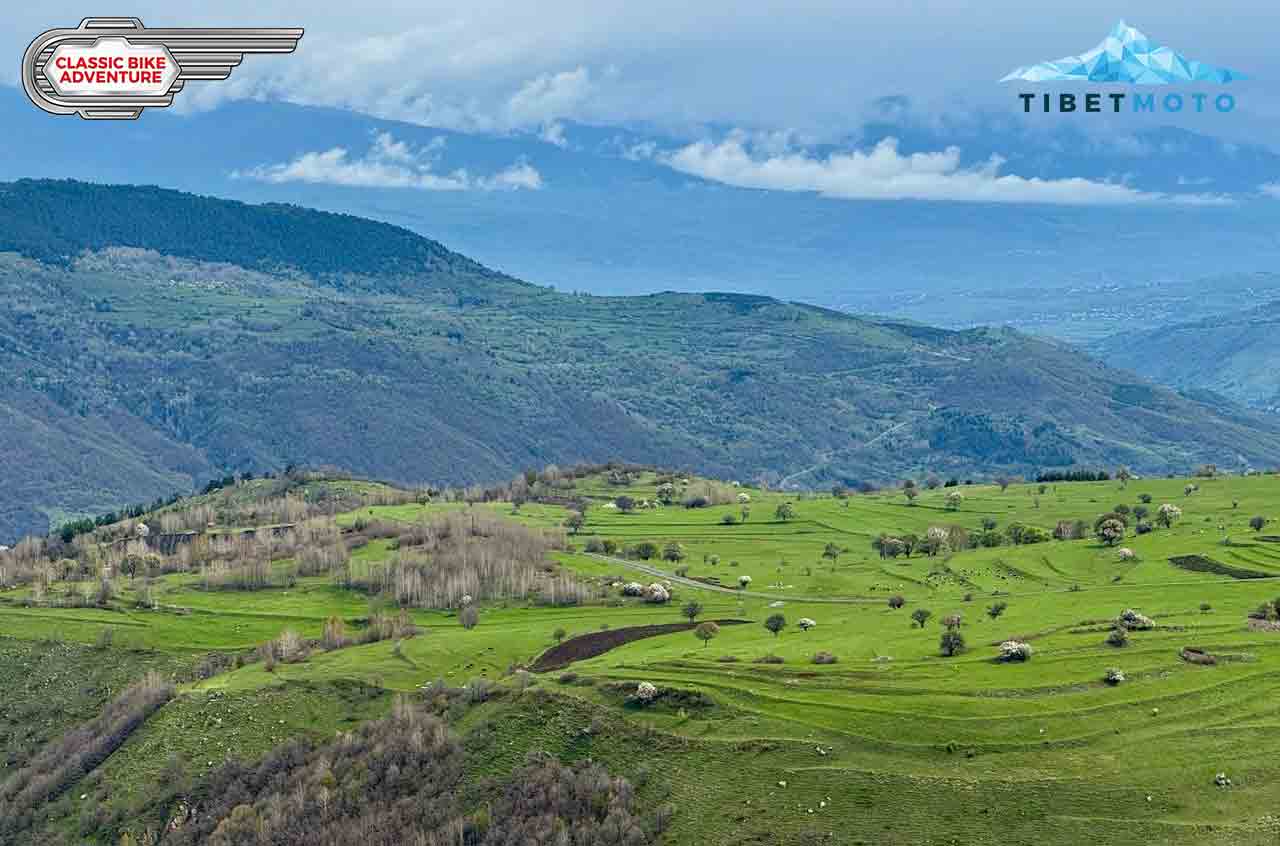
Leaving Savsat, the route winds through the lush mountain landscapes of northeastern Anatolia toward the Georgian border. Dense forests, narrow valleys and light traffic characterize this section. After crossing into Georgia, the scenery gradually opens up. The day ends in Akhaltsikhe, a historic town in southern Georgia that marks a cultural transition between Anatolia and the Caucasus.
Distance: approx. 160 km, Georgia
Day 13: Alkhaltsikhe – Tibilis
The route continues northeast across wide plateaus and along the Kura River valley. Arid hills, agricultural land and occasional monastery complexes line the way. Upon arrival in Tbilisi, the group reaches the political and cultural center of the country — a city shaped by Persian, Russian and Caucasian influences.
Distance: approx. 210 km
Day 14-15: Tbilisi
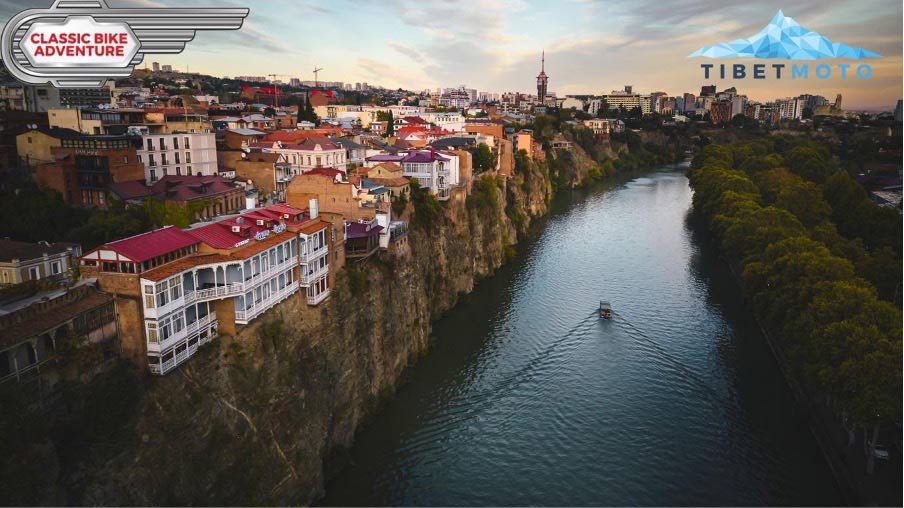
These days are dedicated to exploring Tbilisi. Those who wish can take a walk through the old town, wandering narrow alleys past traditional houses, churches, and the famous sulfur baths. Viewpoints and walks along the Kura River offer constantly changing perspectives. Cafés, restaurants, and wine bars invite you to experience Georgian hospitality and enjoy a relaxed end to the day. The double overnight stay ensures a relaxed travel rhythm before continuing the journey. While we explore Tbilisi, the vehicles are shipped across the Caspian Sea to Aktau.
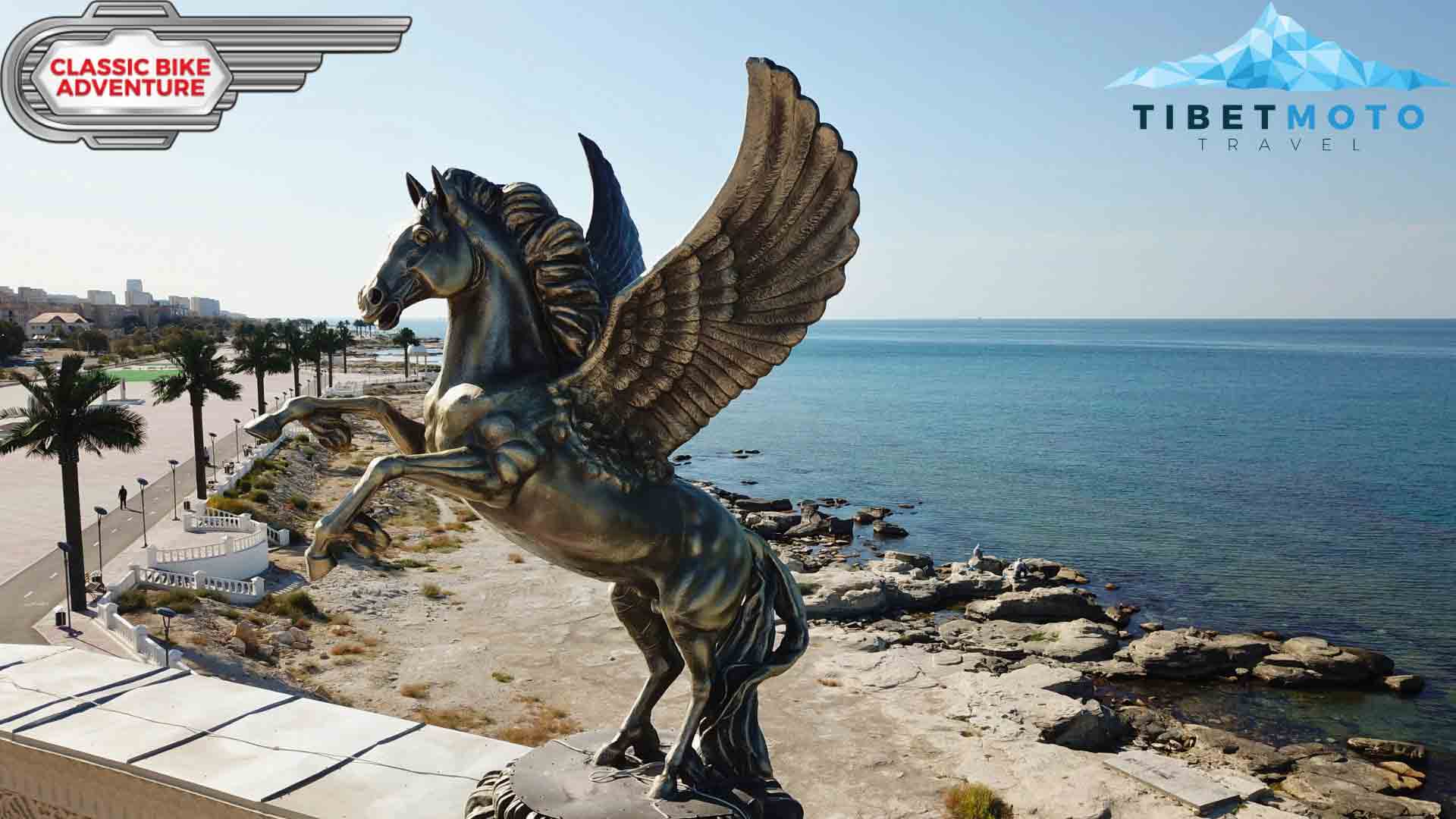
Day 16-18: Aktau
After leaving the Caucasus region, the journey continues to Kazakhstan by ferry. In Aktau, located on the coast of the Caspian Sea, the next section of the route begins. These days are reserved for arrival, organization, and preparation for the upcoming stages across the vast landscapes of Central Asia.

Day 19: Aktau – Beyneu
The ride from Aktau to Beineu leads through the wide, barren landscapes of western Kazakhstan. The road runs largely straight through semi-desert and steppe, accompanied by endless horizons and a strong sense of openness.
Distance: approx. 460 km
Day 20: Beyneu – Nukus
After crossing the border into Uzbekistan, road conditions change noticeably. A long, at times demanding stretch leads through the vast desert landscapes of the former Aral Sea region. The route crosses the barren expanses of the Aralkum Desert, which emerged after the lake dried up – silent, wide, and deeply impressive. The presence of what was once the world’s fourth-largest inland sea is still palpable.
Read more
Optionally, there is the opportunity to detour to Mo‘ynoq, the former port town on the Aral Sea. Today, rusting shipwrecks lie stranded in the sand – haunting relics of an ecological catastrophe and one of the most striking places in Central Asia.
By evening, we reach Nukus, the cultural center of Karakalpakstan. Known for the renowned Savitsky Museum, the city forms a strong contrast to the remoteness of the desert stage. Depending on arrival time, there is space to settle in and take in the atmosphere, often accompanied by a spectacular red desert sunset.
Distance: approx. 520-710 km

Day 21: Nukus – Khiva
The route continues through the wide plains of Khorezm, following sections of the historic Silk Road. After a short drive, we arrive in Khiva (also spelled Xiva), the former capital of the Khanate of Khiva. The completely preserved old town Itchan Kala has been a UNESCO World Heritage Site since 1990 and impresses with its adobe city walls, madrasas, minarets, and richly decorated facades. In the afternoon, there is time for a walk through the narrow alleys of the old town and a relaxed end to the day with a cold drink.
Distance: approx. 180 km
Day 22: Khiva – Buchara
We traverse the Kyzylkum Desert to reach Bukhara, one of the oldest cities in Uzbekistan. Like Samarkand, it was a major trading and resting place on the ancient Silk Road. With over 140 architectural monuments, Bukhara is an impressive “museum city.”
During a stroll through the old town, we visit the mosques and madrasas of Bukhara. The historic center has been on the UNESCO World Heritage list since 1993.
Distance: approx. 460 km


Day 23: Buchara – Samarkand
This pearl of the Silk Road, which awaits us at the end of a hot day of riding, impresses with its Islamic architecture. It’s no surprise that it has been designated a UNESCO World Heritage site. At the same time, we find ourselves in a modern city that offers plenty of amenities.
Distance: approx. 280 km
Day 24: Samarkand visiting day
Samarkand visit day.
We explore Registan Square and the adjacent madrasas, along with other notable attractions. There will be ample time to visit the night market and take care of any shopping or personal needs.


Day 25: Samarkand – Dushanbe
After crossing the border, we head to the capital of Tajikistan, Dushanbe. We continue through the desert, but soon after, we gain elevation, and the land becomes more fertile, indicating our approach to the Pamir Mountains. Dushanbe is situated in the Hisor Valley at approximately 800 meters above sea level and serves as the cultural and economic center of Tajikistan. This prosperous city boasts a beautiful cityscape with green boulevards, international restaurants, and even a vibrant nightlife.
Distance: approx. 300 km, Tajikistan
Day 26: Dushanbe – Kalaikum
The journey along the Pamir Highway begins, taking us over gravel tracks and asphalt. Nowadays, only about half of the route is gravel. From Dushanbe, there are two routes to Kalaikum: a northern route and a southern route (which is longer). Depending on which route is more passable seasonally, we will decide accordingly. Kalaikum, with a wild river flowing through its center, is one of the most attractive places in the Pamir Mountains.
Distance: approx. 270/380 km


Day 27: Kalaikum – Khorog
All roads lead to Khorog: a wild ride through one of the most beautiful and spectacular routes in Central Asia – mostly on well-maintained gravel – awaits us. Khorog, the administrative center of the Pamirs, welcomes us with its bazaars and tea houses.
Distance: approx. 240 km
Day 28: Khorog – Murghab
Murghab is located in the middle of the Pamir Plateau – a remote place and a border town, on one side leading to China and on the other to Kyrgyzstan. The final kilometers before reaching Murghab are quite demanding, as the track is not easy to navigate.
Distance: approx. 320 km
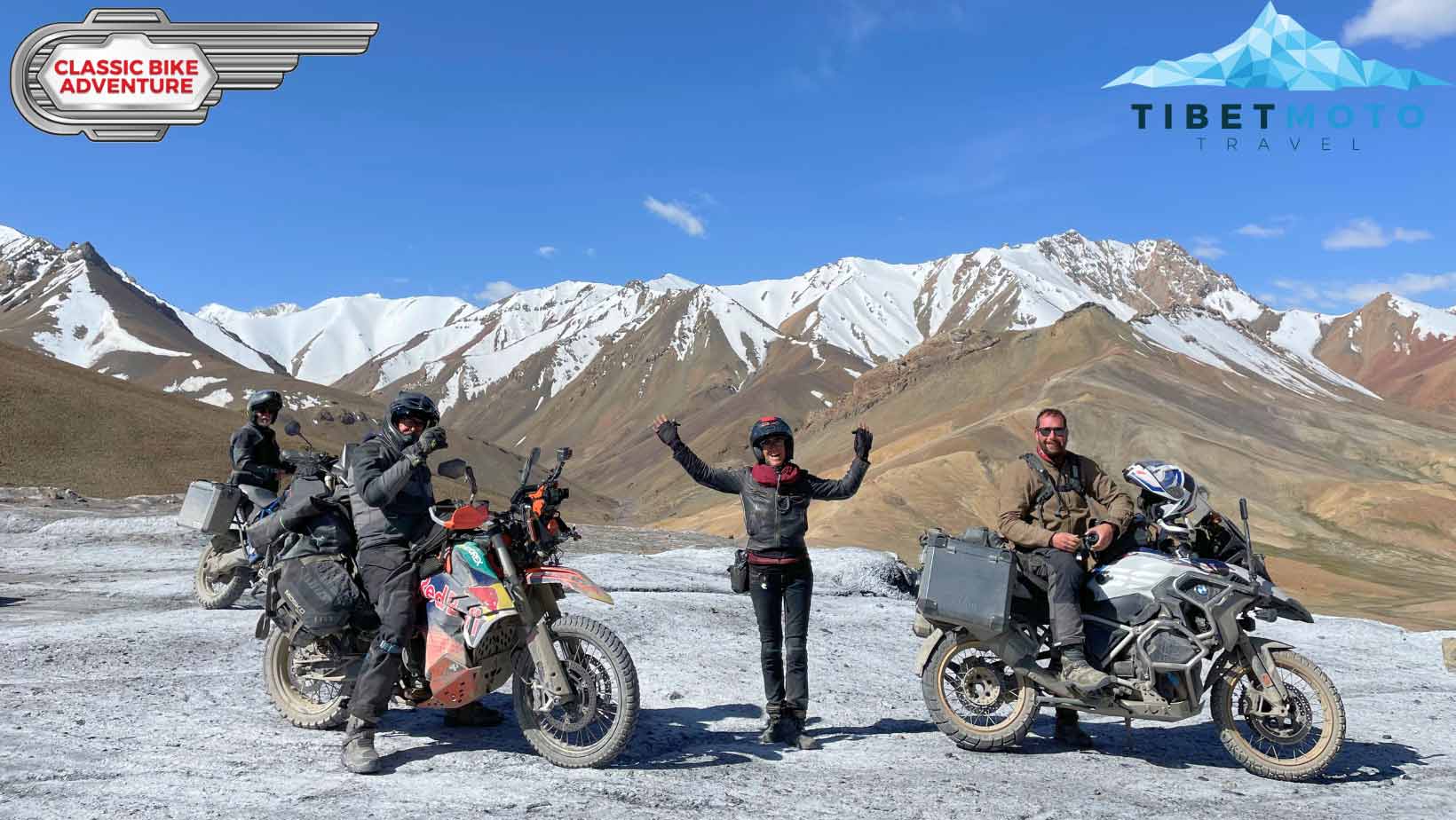

Day 29: Murghab – Osh
Today, we cross the border into Kyrgyzstan via the Kyzyl Art Pass (4,280m). The pass is one of the most remote in the region, and the ascent is typically unpaved, as is common here in the Pamirs. Some challenging sections await us. From Sary Tash, the road improves, and we are greeted by the gentle Kyrgyz grasslands. First, however, we must complete the border formalities, then we leave the beautiful Pamir Mountains behind and turn our attention to adventures in Kyrgyzstan.
Distance: approx. 410 km
Day 30: Osh
Osh is one of the largest cities in the country, featuring an airport and a good tourist hotel. We will have a rest day in Osh.


Day 31: Osh – Toktokul
We continue our journey to Toktogul Reservoir, and finally, we are back in the mountains. The first part of the route leads to Jalalabad, where the road is paved but busy with traffic. Then, we travel over partly rugged gravel roads and passes, often deserted, through the beautiful and unforgettable mountainous landscape of Kyrgyzstan. We will spend the night in a small village directly at the Toktogul Reservoir in the mountains, with a view of the lake.
Distance: approx. 350 km
Day 32: Toktokul – Song Kul
Today, we venture even deeper into the mountains to the idyllic and remote Song Kul Lake, where we will stay in traditional yurts by the lakeshore. Here, we will get to know and experience the land, people, nomads, and farmers up close. An unforgettable experience awaits us.
Distance: approx. 260 km
Day 33: Song Kul – Tash Rabat
Tash Rabat is a well-preserved 15th century caravanserai. Today’s overnight stay takes place in a yurt camp. The path to the historic settlement, which translates as “Stone Hostel”, continues today over fantastic slopes. Tash Rabat is located in the Old Bashi Mountain Range, part of China’s Tian Shan Mountains, on the ancient Silk Road.
Distance: approx. 180 km
Day 34: Tash Rabat – border at Kashgar – Kashgar
Around midday we reach the Kyrgyz-Chinese border area. We pass an archaeological excavation site and from there drive along a lake to the 3,752 meter high Torugart Pass – the border between Kyrgyzstan and China. From Torugart Pass we drive down and enter China. The vehicles must be parked 120 km away from the Chinese customs station. We have a transfer to Kashgar in the afternoon and another transfer back to the customs station the next morning to collect our motorbikes there.
Distance: approx. 220 km, China


Day 35: Kashgar
Kashgar Transport Office. The temporary Chinese driving licenses and license plates will be issued today. A short medical/technical check is also required for drivers and vehicles. The on-site team will take care of everything, you just need to be patient.
Distance: approx. 150 km, China
Day 36: Kashgar
Another day of rest and organization in Kashgar, which we also grant to the Chinese authorities. In China the formalities can sometimes take a little longer. We visit the beautiful old town of Kashgar and watch the market. The barbecue/grilled meat of lamb and beef in the numerous restaurants is among the best in all of China.


Day 37: Kashgar – Yecheng
On the way to Yecheng we pass checkpoints and have to register with the police several times – this requires patience. After all, it is one of the most restrictive areas in the world that we are driving through today. The climate here on the Silk Road, very close to the Taklamakan Desert, is downright desert-like hot.
Distance: approx. 260 km
Day 38: Yecheng – Dahongliutian
Today we go from the “deep” of the Tarim Basin and the desert-like areas on the Silk Road up into the Tibetan mountains with the first pass beyond 5,000 meters. Another pass, again 5,000 meters high, awaits us afterwards. Then we head across the vast Tibetan plateau along mountains and rivers to Dahongliutian, a tiny town in the middle of nowhere. The plateau is deserted and with a little luck we can see wild horses in the distance, which the locals call kiang, eagles, migratory birds or the Himalayan wolf.
Distance: approx. 360 km

Day 39: Dahongliutian – Ali
Via Pangong Lake to Ali. Pangong Lake lies at an altitude of 4,250 meters, is 134 kilometers long, and is located half in Chinese and half in Indian territory. One side of the lake is filled with salt water while the other side has fresh water. The area is inhabited in summer by nomads who graze their herds of yaks on the grasslands. Our destination for the day Ali is the administrative capital of western Tibet and the first real city since Kashgar.
Distance: approx. 550 km
Day 40: Ali – Guge Kingdom
Departing from Ali, the road leads through the remote vastness of western Tibet. The landscape is stark, wind-shaped and defined by an almost archaic stillness. The destination is the historic Guge Kingdom, whose ruins are dramatically embedded in eroded clay formations and rocky cliffs. The remains of this former civilization rank among the most impressive archaeological sites in Tibet.
Distance: approx. 250 km

Day 41: Guge Kingdom – Mt. Kailash
The journey continues through the remote Ngari region. Expansive plains, salt lakes and snow-covered peaks dominate this high-altitude section in far western Tibet. As the route approaches Mount Kailash, the atmosphere becomes noticeably more contemplative. The distinctive pyramid-shaped peak is considered sacred in Hinduism, Buddhism, Jainism and Bön, and remains one of Asia’s most significant pilgrimage destinations.
Distance: approx. 250 km
Day 42: Mt. Kailash
The rest day at Mount Kailash offers time for acclimatization and individual exploration. Many pilgrims begin their circumambulation of the sacred mountain here, while others take the opportunity to experience the stillness and spiritual presence of this unique place. At an altitude of over 4,500 meters, recovery and preparation take priority before the journey across the Tibetan Plateau continues.


Day 43: Mt. Kailash – Saga
We head to Saga along the deep blue Lake Manasarovar (divine lotus lake, at 4,586m), a freshwater lake with depths of up to 77 meters, over which snow-capped mountains tower. Today too, the endless expanses of Tibet and a beautiful mountain pass await us at the end of the day.
Distance: approx. 490 km
Day 44: Saga – EBC (Everest Base Camp)
Today we go very close to the Nepalese border along Lake Peiku (4,591 meters high) and over some winding passes, almost 5,000 meters high. Today, stretches of road are in somewhat worse condition, at least up to Lake Paiku. From there we drive along an incredible road with hundreds of twists, turns and views of the numerous 8,000 meter high peaks, one of the many highlights on our tour. The road first takes us to Tingri and winds over two passes from which we have a perfect view of the world-famous and highest mountains on earth: Shisha Pangma (8,012m), Cho Oyu (8,201m), Lhotse (8,561m) Makalu (8,463m) and of course Everest (8,848m) offer unique and spectacular views.
Read more
Then we reach the Rongbuk Monastery at an altitude of almost 4,900 meters. A few dozen kilometers before the Rongbuk Monastery we are forbidden to continue on our motorbikes – we continue using local means of transport. Although the base camp, which is 2.5 kilometers from Rongbuk Monastery, has been closed since January 2019, we have an excellent and equally good view of Everest. The unobstructed view of the 8,848 meter high summit of Everest rewards all exertion. We will spend the night in the hotel directly at the Rongbuk monastery with a view of Everest. A “once-in-a-lifetime” experience.
Distance: approx. 400 km

Day 45: EBC – Xigaze
Today we’re going to Xigaze. We drive over the Gyatso-La Pass, 5,222 meters high and the highest pass of the trip. In Xigaze we stay overnight in a comfortable hotel in the city center. There are markets nearby and the Tashilhunpo Monastery that we can visit in the late afternoon. Tashilhunpo Monastery is the second largest monastery in Tibet and was founded in 1791. From the temples of the monastery complex there are beautiful views of the valley and the town of Xigaze.
Distance: approx. 330 km
Day 46: Xigaze – Gyantse
Leaving Xigazê, the route crosses the central Tibetan plateau toward Gyantse. The once stark high-altitude landscape gradually gives way to cultivated fields, small villages, and scattered farmsteads — a noticeable contrast to the remote terrain of previous days. In Gyantse, we visit the impressive Kumbum Stupa at Palcho Monastery, the largest of its kind in Tibet. Overlooking the town stands the historic Gyantse Dzong, a fortress offering wide views across the valley. The shorter riding day allows ample time to explore this historically significant town.
Distance: approx. 90 km
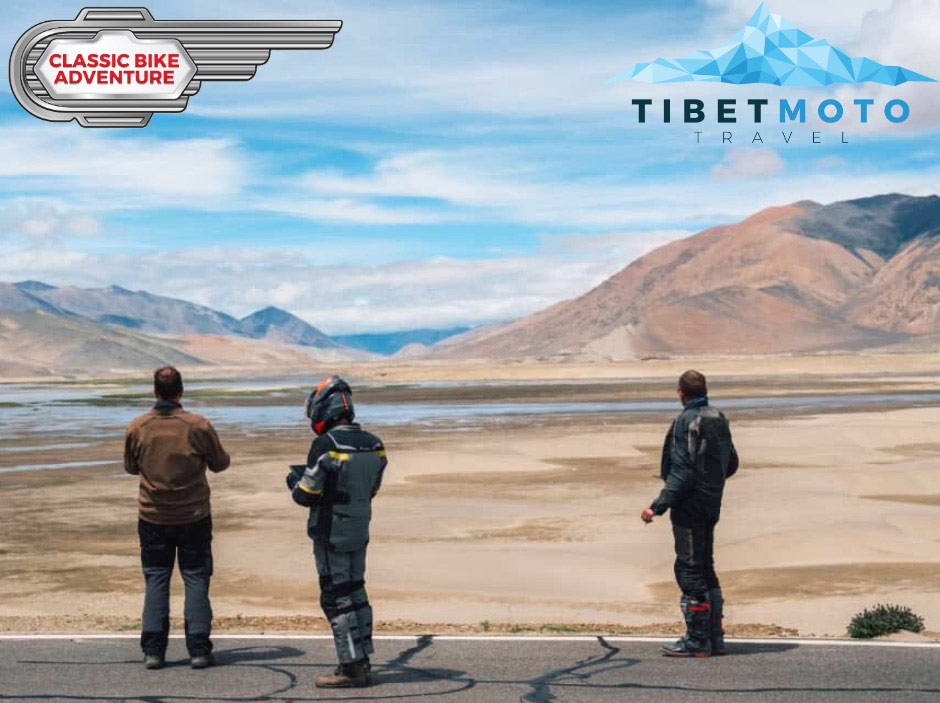
Day 47: Gyantse – Lhasa
From Gyantse, the road climbs toward the 5,100-meter-high Karo La Pass, running directly beneath a massive glacier. The high-alpine scenery is dramatic and unforgettable. Continuing onward, we reach the turquoise waters of Yamdrok Lake. At nearly 4,900 meters, sweeping views open across the intensely blue lake framed by snow-covered peaks. Following winding highland roads and sections near the Yarlung Tsangpo River, we gradually descend toward the fertile valley leading to Lhasa. After crossing the final pass, the landscape opens — and at last we arrive in Lhasa, the legendary destination of this journey. From Munich along the historic Silk Road to the “Roof of the World,” this is the moment to reflect on the distance covered and the achievement of reaching Tibet’s spiritual heart.
Distance: approx. 270 km
Day 48-50: Lhasa
Shipping of motorcycles. The next days serves as a buffer days in case there are delays.
We also dedicate ourselves to the cultural side of Lhasa, the mystical capital of Tibet. Lhasa, literally translated as “place of the gods”, has some of the sights in store for us. In the morning we head to the iconic Potala Palace, the former residence of the Dalai Lama. We visit the palace inside and out and get to know Tibet’s eventful history better. Then we stroll through the narrow streets of the Barkhor market. The vibrant market is a melting pot of Tibetan culture, where vendors sell goods and souvenirs – from traditional garments and jewelry to religious artifacts. The numerous pilgrims walk clockwise around the heart of the market – the Jokhang Temple. The Jokhang is the most important temple of Tibetan Buddhism, which we then visit.
Read more
For many Tibetans, this temple is the spiritual center of Tibet and the destination of countless pilgrimages. Here we experience the deep religiosity of the Tibetan people up close. In the afternoon our journey takes us to the Sera Monastery. Located a few kilometers outside the city, this monastery is famous for its lively theological debates, where the monks punctuate their arguments with lively gestures and shouts. A captivating end to an unforgettable day in Lhasa.


Day 51: Lhasa- Chengdu
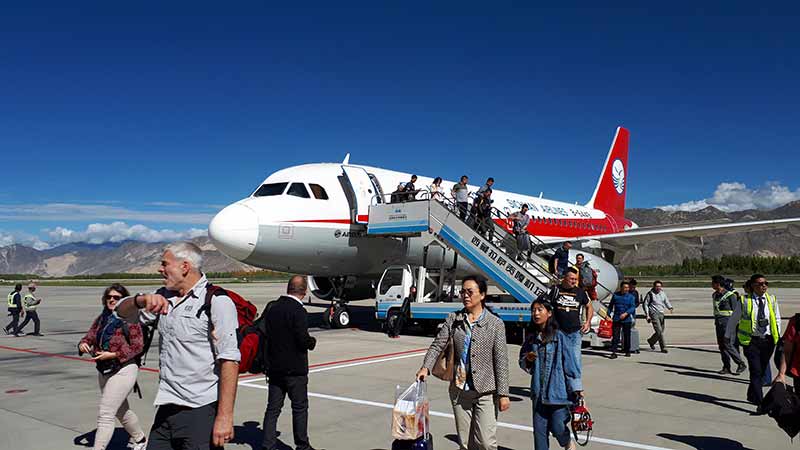
Departure from Lhasa: Flight to Chengdu and transfer to the hotel. If you want, you can either extend your stay in Chengdu yourself – or take the onward journey from Lhasa to Dali.
(The onward journey to Dali via the Eastern Himalayas follows seamlessly from Lhasa on day 47. Please request the separate advertisement for this.)
Airport transfer 1 hour
Day 52: Chengdu
Individual departure from Chengdu.
Not ready for your adventure to end yet? Check out the optional Lhasa to Dali extension next!
Munich to Tibet Overland Motorbike Adventure –
Optional extension to Dali
From Tibet to the subtropics of Yunnan: curves, adventures and the fascinating landscape of Eastern Tibet
Until recently, these roads were blocked for foreigners: the way down from the Tibetan high plateau to the subtropical Yunnan across the Eastern Himalayas. Now you can have everything:
Undiscovered nature on the banks of the Mekong, snow-capped Himalayan peaks, hot springs, deep coniferous forests and the tea and banana plantations in the subtropics of Yunnan Province, which means “south of the clouds”. And of course roads with fantastic curves for motorcyclists.
We leave the metropolis of Lhasa and stay in the heights of the Himalayas for the next few days. Remote mountain roads await us in Eastern Tibet, we go through primeval forests, the “Switzerland of the Orient” in Lulang and across grasslands where yaks graze. At Lake Ranwu, which is framed by 5,000 meter high peaks, we say goodbye to the Himalayas and drive down into the subtropics. We cruise along the majestic Mekong, Salween and Yangtze rivers, the longest river in Asia, for views of sandstone landscapes and deep canyons. The majestic view of one of the highest peaks in the Eastern Himalayas, the 6,700 meter Kawa Karpo (Meili Xueshan), and the subsequent overnight stay with a local Tibetan family is certainly one of the highlights of the extension.
After visiting the beautiful old town of Shangri-la, built entirely of wood, we drive through one of the deepest gorges in the world, the Tiger Leaping Gorge, and we are presented with otherworldly landscapes with overhanging cliffs and three-kilometer-high steep walls over which the majestic jade dragon snow mountain range is enthroned. Here we leave the world of the Tibetans behind us. The subtropics are waiting. The colorful old town of Dali offers the perfect end to our East Tibet tour extension, here we get to know the old, authentic China. From here it goes back to Chengdu.
Extension 1 – Via Tibet to Dali – Itinerary
Day 51: Lhasa – Nyingtri
Early start. Before lunch we visit the Ganden Monastery, one of the most impressive and culturally important monasteries in Tibet. We plan 1-1.5 hours for the visit to the Ganden Monastery, which is located at an altitude of 4,300 meters, because the breathtaking views on the circular path around the monastery, which was founded in 1409, are spectacular. We drive east and follow the Yarlung Tsangpo. The wide and lively river and important water artery of Tibet accompanies us for a whole part of the day and will captivate you with its fascinating views.
Distance: approx. 400 km
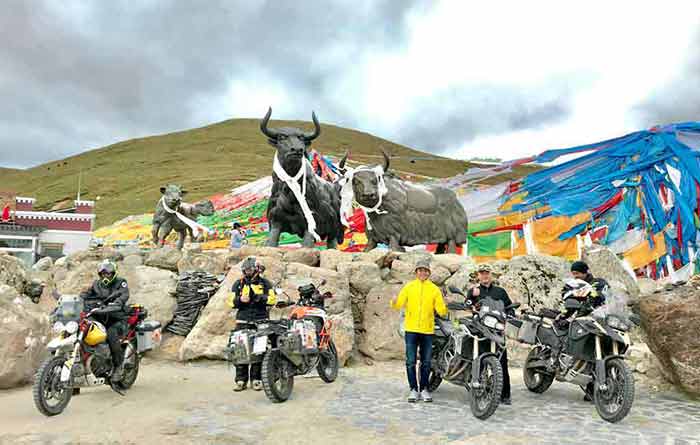

Day 52: Nyingtri – Bome- Ranwu
Today, spectacular views are on the agenda. We drive over various mountain passes on the way to Lake Ranwu and enjoy the view of the fascinating green valleys and yak pastures, which the Chinese call the “Switzerland of the Orient”, because the barren landscapes of the Himalayan plateau give way to coniferous forests and make room for nomads and their yaks.
We spend the night on the beautiful shore of Lake Ranwu at an altitude of 3,850 meters near a small Tibetan village and enjoy the sunset on the lake, which is framed by often snow-capped 5,000 meter high mountains.
Distance: approx. 360 km
Day 53: Ranwu – Zogang
The East Himalaya Tibet motorcycle tour now takes us along the shore of Lake Ranwu in the direction of Zogang. The first part of the day leads through narrow gorges, then a snake pass, which the locals simply call the “road of 72 bends”, is on the program and is one of the driving highlights, because the serpentines lead to a 4,300 meter high pass that offers fantastic views of the valley below.
Distance: approx. 290 km


Day 54: Zogang – Deqin
Two more passes at 5,000 and 3,900 meters in altitude await us. The landscapes become more barren again and the Salween shows its gorges of yellow sandstone. Shortly afterwards we reach the upper reaches of the Mekong. There, an encounter with a real Tibetan family awaits you. We spend the night in our homestay with Hendrik’s Tibetan family, the ring-in-law cooks with locally grown vegetables and there is also the distilled liquor and red wine from their own production. Here you get an authentic impression of the life of the local Tibetans. Today is the last day of driving in the province of Tibet. In the early afternoon we are already in Yunnan.
Distance: approx. 410 km
Day 55: Deqin – Shangri-La
On this stretch of the Overland East Tibet and Yunnan extension, the last Himalayan pass at 4,300 meters awaits us – the White Horse Pass. The extremely winding roads and the small idyllic villages offer many more highlights.
In Shangri-la we visit the largest prayer wheel in the world on the Turtle Mountain and the beautiful old town of Dukezong, built entirely of wood.
Distance: approx. 210 km


Day 56: Shangri-La – Tiger Leaping Gorge – Lijiang
Today we drive through one of the deepest gorges in the world, the Tiger Leaping Gorge. Three-kilometer-high cliffs and the 5,500-meter-high mountain range of the Jade Dragon Snow Mountain towering above them await us. Afterwards we visit the UNESCO World Heritage Old Town of Lijiang, where we spend the evening. Today we finally leave the world of the Tibetans and immerse ourselves in the area of the Naxi.
Distance: approx. 150 km
Day 57: Lijiang – Dali
Short drive to Dali. Here we leave the motorbikes behind, walk through the old town and visit a bar. We celebrate.
Distance: approx. 200 km


Day 58: Dali – Chengdu
Dali departure day. End of the 1st extension.
Start of the optional extension to Bangkok.
Day of rest and individual visits to sights in Dali, such as the 1200 year old Three Pagodas, the cable car up into the Cangshan Mountains or a trip to Erhai Lake.
Overland Tour –
Optional extension to Bangkok
From the majestic mountains of China through Laos, Vietnam, Thailand to Bangkok
Our journey begins in the historic town of Dali, set against the backdrop of Yunnan’s mountains and ancient trade routes. From here, the route leads through remote landscapes and culturally rich regions of southern China, passing tea plantations and traditional villages before reaching the tropical atmosphere of Xishuangbanna.
As we leave China behind and cross into Southeast Asia, a new chapter of the adventure unfolds. Entering Laos, the pace of life slows as we drive through lush mountains and quiet valleys to Muang Xai and onward to the historic town of Dien Bien Phu in northern Vietnam. From here, spectacular mountain roads lead us to Sapa, famous for its dramatic scenery, terraced rice fields, and vibrant hill tribe cultures. Continuing through the remote Nam Dam region, we experience the unique cultures of the Hmong and Dzao, including the opportunity to witness a traditional performance by our Dzao hosts.
Read more
On the way to Bao Lac we join sections of the renowned Ha Giang Loop, one of Vietnam’s most breathtaking mountain routes, before continuing to Hanoi, the lively capital rich in culture and history. Here we have time to explore the city as well as carry out any necessary vehicle maintenance. Leaving Hanoi, the journey continues through the scenic Mai Chau valley and across the border into Laos. Remote mountain roads lead us to Sam Nuea and onward to Phonsavan, home to the mystical Plain of Jars, one of Southeast Asia’s most intriguing archaeological landscapes. From there we drive to Luang Prabang, the UNESCO World Heritage-listed city renowned for its well-preserved temples, colonial architecture, and serene setting along the Mekong.
Following the Mekong south to Pak Beng, we then cross into northern Thailand and ride to Nan, passing the historic Bo Klueah salt mines where salt has been produced using ancient techniques for centuries. The route then leads to Chiang Mai, known as the “Rose of the North” and the former capital of the Lanna Kingdom. From here we enjoy Northern Thailand’s most rewarding riding routes, including sections of the famous Mae Hong Son Loop, with highlights such as Pai, Mae Sariang, before reaching Sukhothai, the ancient first capital of Siam. The final stage of the journey takes us south toward Bangkok. Thailand’s vibrant capital marks the conclusion of this extraordinary overland adventure in Southeast Asia.
Extension 2 – Southeast Asia – Itinerary
Day 59: Dali – Shuangjiang
Shuangjiang is known for its diverse ethnic composition, including the Dai, Lahu, Wa and other minorities. The region is also known for its tea production, especially Pu’er tea. The landscape is characterized by hills and mountains, making it an attractive destination for nature lovers. Traditional villages, cultural festivals and ethnic customs contribute to the region’s rich cultural heritage.
Distance: approx. 390 km


Day 60: Shuangjiang – Xishuangbanna
Today we enter the tropics and once again cross the Mekong River on its way from the Himalayas to Southeast Asia. Xishuangbanna is known for its tropical rainforests through which the Mekong River flows and its rich biodiversity. The region is home to the Dai (Thai) minority, whose traditional architecture, festivals such as the water-splashing festival and dances characterize the cultural heritage. The region is also known for its Buddhist temples and pagodas, which reflect the cultural and religious significance of Xishuangbanna.
Distance: approx. 340 km
Day 61: Xishuangbanna (Jinghong) – Muang Xai (Entering Laos)
Our journey today takes us out of China to Oudomxay in Laos. The route leads through dense forests and along the mighty Mekong River. Muang Xai, the capital of Oudomxay province and the largest city in northern Laos, is a center for travel and exploration with lively markets selling local produce and handicrafts from all over the province. It is known for its picturesque mountains, its multi-ethnic culture, the Oudomxay Museum, the Phuuthat Stupa, and the village of Ban Chom Ong, home to the famous Chom Ong Caves.
Distance: approx. 270 km, Laos


Day 62: Muang Xai – Dien Bien Phu
Today’s route takes us deeper into northern Laos before we approach the border with Vietnam. The landscape becomes more mountainous, with increasingly dramatic views as we climb toward the crossing point. After the uncomplicated exit and entry procedures, we immediately feel the shift into Vietnam — the architecture changes, and the roads twist more steeply through dense jungle. The final stretch into Dien Bien Phu is scenic, with open valleys and rice fields framed by forested hills.
In the afternoon, we arrive in the historically significant town where one of the most decisive battles of the 20th century took place. We’ll have time to explore the local museum or simply relax with a Vietnamese coffee in the town center.
Distance: approx. 210 km, Vietnam
Day 63: Dien Bien Phu – Sapa
Today is hands down one of the most spectacular riding days in Vietnam. Leaving Dien Bien Phu, the road begins to climb almost immediately, taking us through remote highland villages and terraced hillsides. As we ascend toward Sapa on snaking mountain roads, the air cools, the vegetation thickens, and the views become increasingly dramatic. The final kilometers into Sapa deliver unforgettable panoramas of cascading rice terraces cut into steep mountain slopes. Sapa itself is a lively mountain town known for its diverse ethnic cultures, iconic landscape and vibrant night life. In the late afternoon, we will have time to leisurely walk around the city and enjoying the sights.
Distance: approx. 270 km


Day 64: Rest Day in Sapa
A rest day in Sapa offers the opportunity to slow down and enjoy one of northern Vietnam’s most scenic and culturally rich regions after many days on the road. There are numerous options to make the most of the day. A highlight is the cable car journey to Fansipan Mountain, the highest peak in Indochina, offering spectacular panoramic views and a memorable experience high above the surrounding valleys. Alternatively, explore the town and nearby villages, visit local markets and handicraft shops, or simply enjoy the mountain scenery and relaxed atmosphere. Sapa is also well known for its traditional hotpot, one of the region’s signature dishes. For relaxation and recovery, traditional spa treatments and herbal baths are also available, offering a welcome chance to unwind before continuing the journey.
Day 65: Sapa – Nam Dam
We begin the day driving out of Sapa through rolling highlands and quiet backroads that offer endless views of terraced fields. We continue eastward into a region shaped by sharp limestone peaks and deep valleys, with winding roads that are a pure pleasure. As we approach Nam Dam, the landscape becomes more serene, and the surrounding rural villages offer an authentic immersion into Dao culture. We spend the night in this peaceful, remote setting at a traditional homestay, with the unique opportunity to enjoy a cultural dance performance by our friendly Dao ethnic hosts. Dressed in their traditional costumes, their performance offers a special insight into their community while being both uplifting and engaging—making it a truly memorable highlight of our journey.
Distance: approx. 220 km

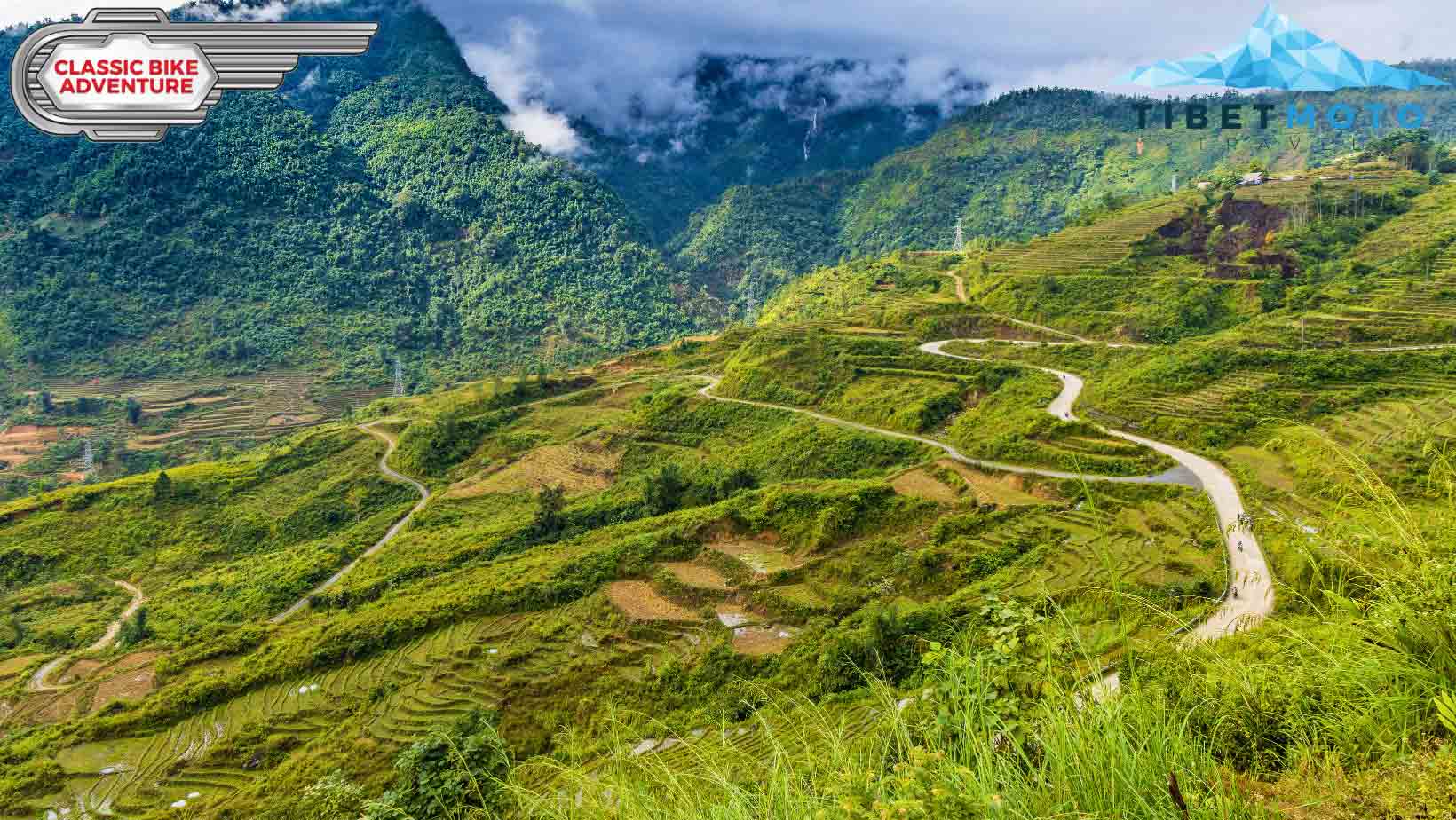
Day 66: Nam Dam – Bao Lac
Today we enter some of the most visually striking landscapes of the entire tour. From Nam Dam we head north into the Dong Van Karst Plateau Geopark, following the northernmost section of the famous Ha Giang Loop. Towering limestone pinnacles rise abruptly from the earth, and the mountain road clings to the cliffs, offering one dramatic viewpoint after another as we approach Dong Van. From Dong Van we continue along this iconic highland route, including the legendary Ma Pi Leng Pass – a world-famous stretch of asphalt carved into sheer rock faces, high above deep canyons and layered mountain ranges.
Read more
This is without a doubt one of the most spectacular roads in all of Southeast Asia. After Ma Pi Leng, the route gradually descends on winding roads towards Bao Lac, where the landscape opens into softer hills, river valleys and small settlements. If we prefer a shorter day of driving – for example due to weather – we can bypass Dong Van and instead follow the QL34 directly from Nam Dam to Bao Lac. This alternative route is less demanding and more flowing, leading us along a quieter main road through rural farmland, forested hillsides and river sections. The scenery is gentler and the riding more relaxed, but still offers an authentic glimpse of northern Vietnam’s countryside. Depending on our choice of route, we arrive in Bao Lac in the early or late afternoon and settle in, enjoying the calm atmosphere of this remote border town.
Distance: approx. 280/160 km
Day 67: Bao Lac – Hanoi
Today’s drive gradually brings us back to civilization as we make our way toward Vietnam’s capital. The first part of the route follows winding mountain and river roads, passing quiet rural settlements where daily life unfolds slowly. As we continue south, the scenery opens up into broader valleys with more traffic, larger villages, and increasing signs of lowland agriculture such as rice paddies, sugarcane fields, and water buffalo grazing near the roadside. The closer we get to Hanoi, the busier the roads become. Local scooters, small trucks, and roadside markets add a lively rhythm to the final stretch, giving us a vivid contrast to the remote highland regions we’ve explored over the past days. Driving into this energetic city is an experience in itself: dense street life, colorful shopfronts, tangled webs of power lines, and the constant movement of Hanoi’s legendary flow of traffic. After checking into our hotel, we have time to explore the Old Quarter or simply unwind in one of the city’s charming cafés tucked into its historic streets.
Distance: approx. 300 km

Day 68: Rest day in Hanoi
A rest day in Hanoi gives us the opportunity to explore the city at our leisure. We visit the Ho Chi Minh Mausoleum, Hoan Kiem Lake, the old town and the numerous museums and temples. Hanoi impresses with its rich culture, history and lively gastronomy scene.
Day 69: Rest Day in Hanoi
An additional rest day in Hanoi gives us time to go over the vehicles and focus on maintenance for the remaining journey to come or simply to relax one more day. Hanoi is the best place to work on the vehicles with easy access to large workshops, spare parts, and more. If a vehicle would benefit from an oil change, this is the perfect time to do it.

Day 70: Hanoi – Mai Chau
We leave the big city behind and head west into Vietnam’s peaceful countryside. The road winds through green hills and takes us past terraced fields and rural villages. As we approach Mai Chau, the landscape opens into a wide valley filled with rice paddies and traditional stilt houses. The White Thai people, who have lived in this region for generations, maintain a distinct cultural identity reflected in their elegant wooden stilt homes, intricate handwoven textiles, and a lifestyle closely connected to rice farming.
Weiterlesen
Their weaving traditions use bright yet harmonious patterns, and their villages are known for hospitality, communal spirit, and a calm rhythm of life centered around agriculture and family. This area is famous for its peaceful and welcoming atmosphere, with rice fields stretching as far as the eye can see — a perfect contrast to the bustle of Hanoi. We spend the night surrounded by natural beauty and rural charm in our lodge.
Distance: approx. 150 km
Day 71: Mai Chau – Sam Nuea
Today we head toward the remote Na Meo border, initially driving through quiet mountain roads and lush Vietnamese landscapes. After completing the exit procedures, we cross into Laos — and the change is noticeable almost immediately. The atmosphere becomes quieter and more relaxed, and the character of the roads shifts as well: the sharper, more trafficked Vietnamese curves give way to irregular Lao mountain roads, often narrower, with patched surfaces and occasional rough sections. The riding becomes slower and more deliberate, offering a different kind of rhythm. As we continue deeper into northeastern Laos, the scenery feels more remote. We pass scattered wooden houses, small farms, and long stretches of untouched forested hills. Villages appear less frequently, and the landscape has a rugged, lightly populated feel typical of this region. By the afternoon, we reach Sam Nuea, a quiet provincial town tucked into rolling green hills – a peaceful end to a long cross-border day.
Distance: approx. 210 km


Day 72: Sam Nuea – Phonsavan
This morning’s drive continues through the calm landscapes of rural Laos. The road offers a mix of sweeping bends and peaceful scenery, with villages scattered along the way. As we approach Phonsavan, the landscape transitions into open plateaus and rolling hills. This region is known for the UNESCO-listed archaeological wonder – the Mystical Plain of Jars. Scattered across the landscape are hundreds of massive stone jars, some weighing several tons, whose origins remain a mystery.
Distance: approx. 240 km
Day 73: Phonsavan – Luang Prabang
We begin the day exploring one of the main sites of the Mystical Plain of Jars, before we head on our way to Luang Prabang. Seeing these jars from close-up truly brings their existence and purpose into question – a monumental prehistoric achievement shrouded in mystery. After our visit, we continue west toward one of the most beautiful stretches of Laos. Mountain ridges, sweeping vistas, and traditional villages accompany us along the way. As we descend toward the Mekong Valley, the scenery becomes lush and green. We arrive in Luang Prabang in the afternoon, giving us plenty of time to rest and relax before enjoying the atmosphere of this UNESCO World Heritage gem – one of the most charming and historically significant cities in Southeast Asia. With its mix of ancient Buddhist temples, French colonial architecture, and tranquil riverside settings, the city exudes a special charm. After checking into our hotel, you can take a stroll through the old town, explore the local markets, or simply relax at a café or bar overlooking the river.
Distance: approx. 350 km

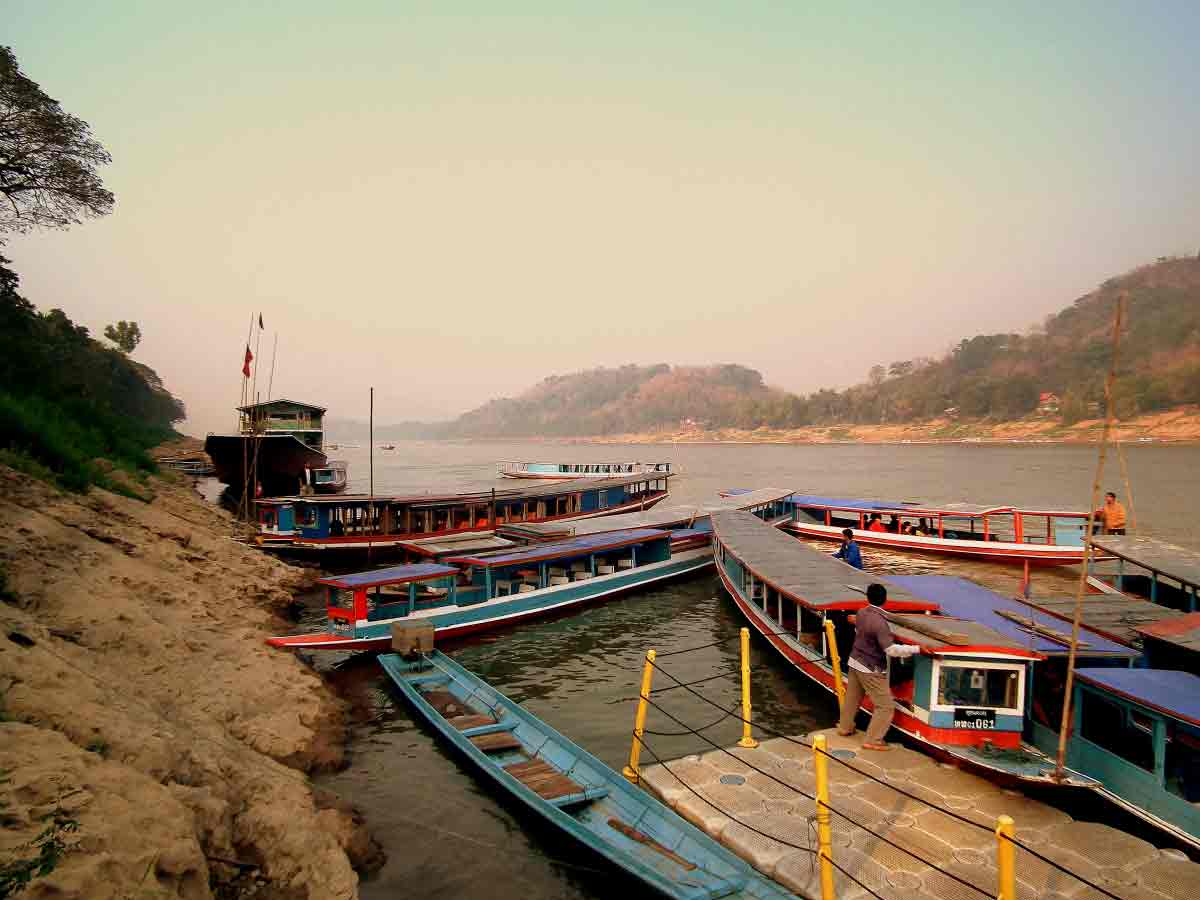
Day 74: Rest Day in Luang Prabang
Today, we take another well-deserved break and immerse ourselves in the magic of Luang Prabang, Laos’ ancient capital nestled between the Mekong and the Nam Khan River. We start the day with a guided city tour, taking in the most important cultural and historical sites. Among them is the magnificent Vat Xieng Thong, a temple known for its intricate golden carvings and elegant roof design. From here, we visit the Royal Palace Museum, which offers insight into Laos’ rich history, before making our way up to Mount Phousi. A short climb rewards us with a breathtaking panoramic view over the city, the Mekong, and the surrounding mountains. Afterward, you have the choice of spending the afternoon at your own pace or going on an optional excursion to some of the area’s natural wonders. For those seeking adventure, a boat trip to the Pak Ou Caves is highly recommended.
Read more
These mystical caves, carved into limestone cliffs along the Mekong, house thousands of Buddha statues, creating a deeply spiritual atmosphere. Alternatively, you can visit the Tat Sae Waterfalls, where crystal-clear pools invite you to take a refreshing swim amid lush greenery. The late afternoon is perfect for strolling through the markets and boutique shops of Luang Prabang, where you’ll find traditional silk products, handmade crafts, and unique souvenirs. As the sun sets, the city transforms into a sea of lanterns, creating an almost magical ambiance.
Day 75: Luang Prabang – Pak Beng
We leave Luang Prabang and follow the Mekong westwards across one of the quietest and most beautiful stretches of northern Laos. The drive offers gentle curves, riverside views, and glimpses of everyday life along the water. By early afternoon, we arrive in Pak Beng, a small town perched above a dramatic bend in the Mekong. Our resort is located high on a hilltop, offering sweeping panoramic views of the river — one of the most scenic overnight stays of the entire tour. This is the perfect spot to unwind and enjoy the sunset in the pool as the Mekong shimmers in golden hues. In the evening, our resort offers a relaxed dinner venue at the top of the hill, overlooking the valley.
Distance: approx. 210 km
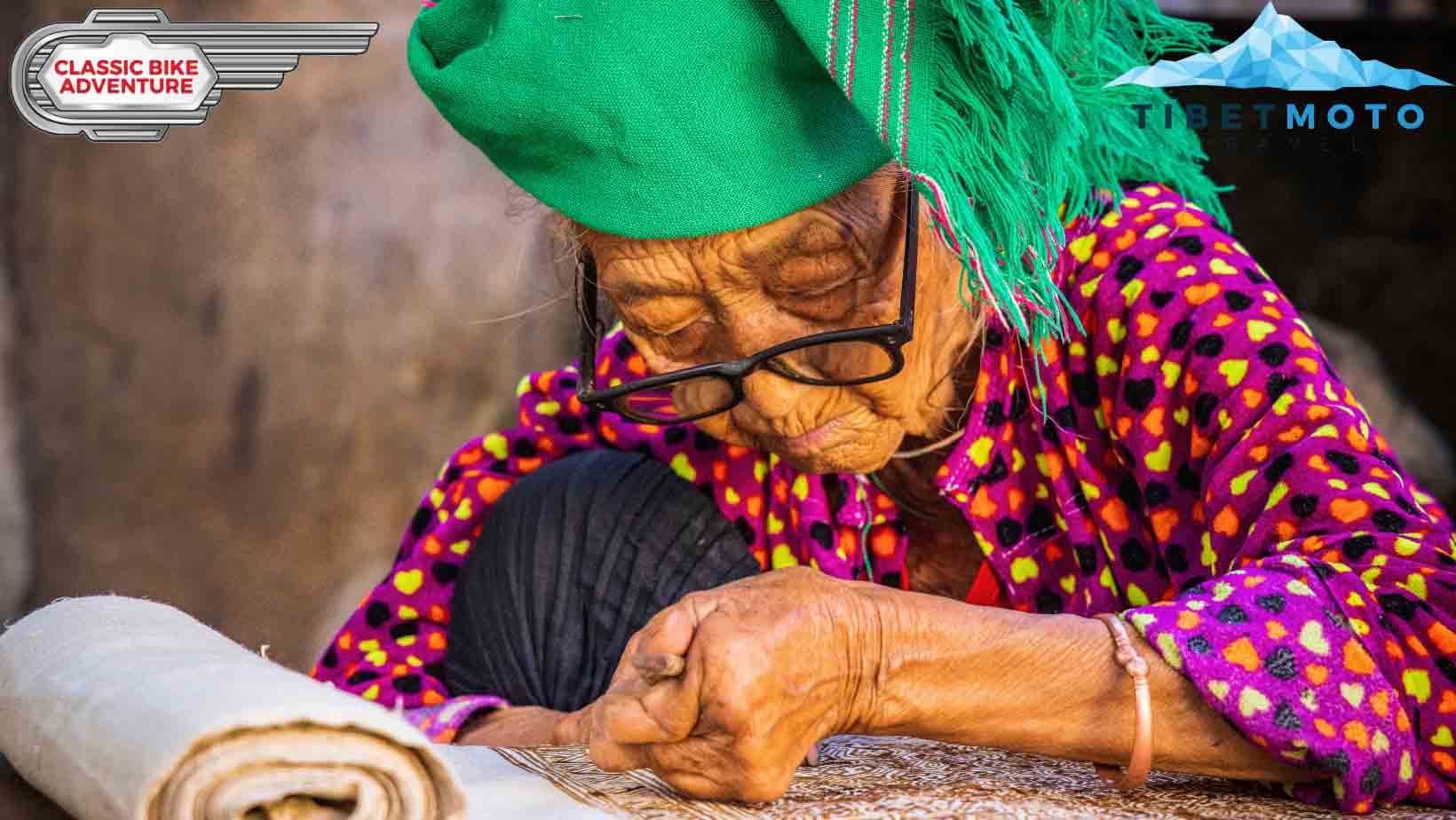

Day 76: Pak Beng – Nan
We begin the day with a short drive to the Thai border, where we complete immigration and customs procedures. After re-entering Thailand, we cruise through a series of mountain valleys known for their excellent road conditions and low traffic. If time permits, we make a detour to the historic Bo Kluea Salt Mines, where salt has been made using ancient techniques for centuries. The landscape becomes increasingly dramatic as we continue toward Nan, one of Thailand’s best-kept secrets for motorcyclists. Smooth asphalt, sweeping curves, and forested mountain scenery accompany all the way into the town. Nan’s laid-back charm provides a relaxing end to the day.
Distance: approx. 230 km with Salt Mine/200 km
Day 77: Nan – Chiang Mai
Today’ is a celebration of Northern Thailand’s world-class roads. We enjoy a series of winding mountain stretches, flowing ridges, and scenic viewpoints as we make our way west to Chiang Mai. Chiang Mai is considered Thailand’s cultural capital, known as the Rose of the North and the capital of the former Lanna Kingdom.
Distance: approx. 310 km
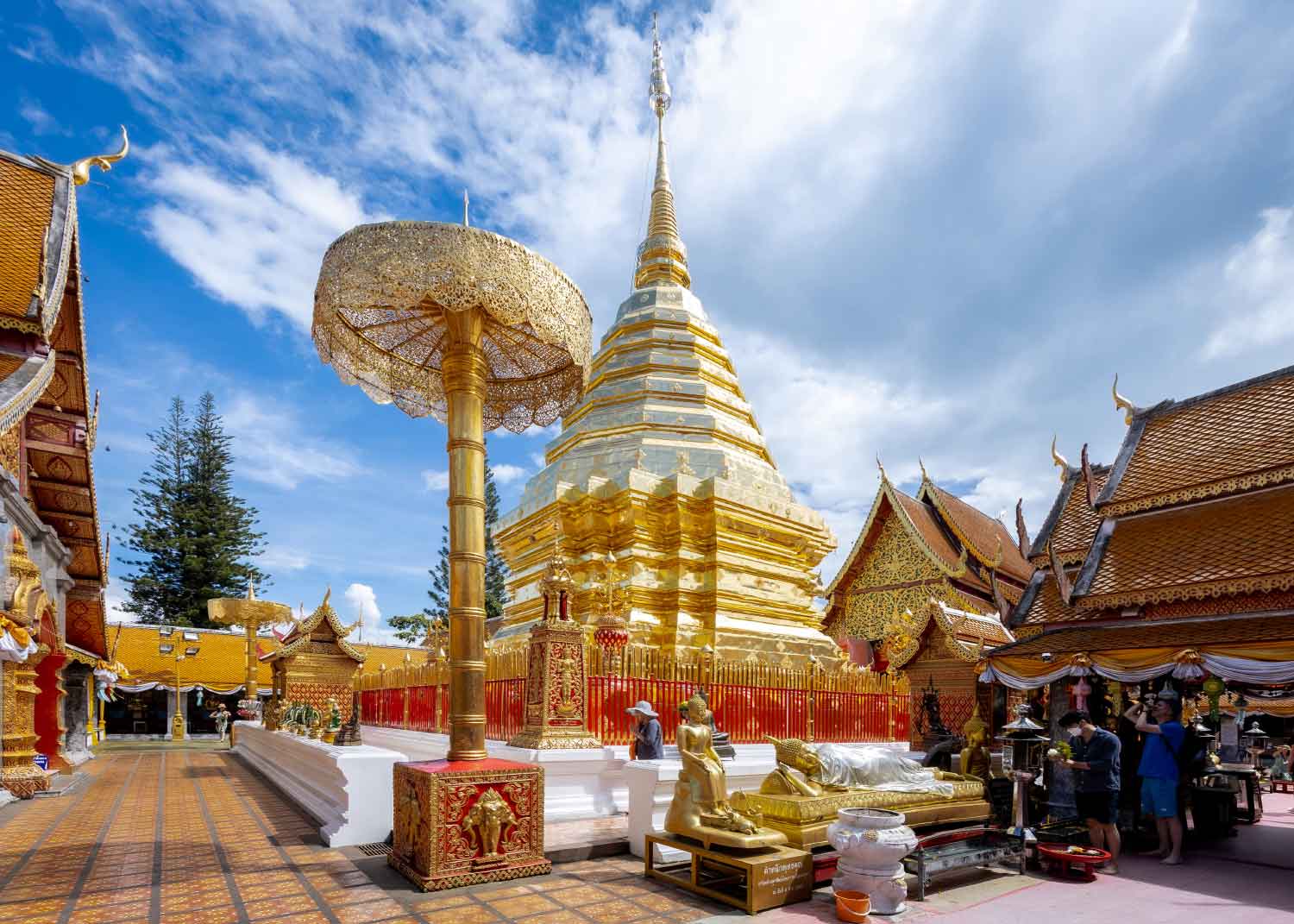
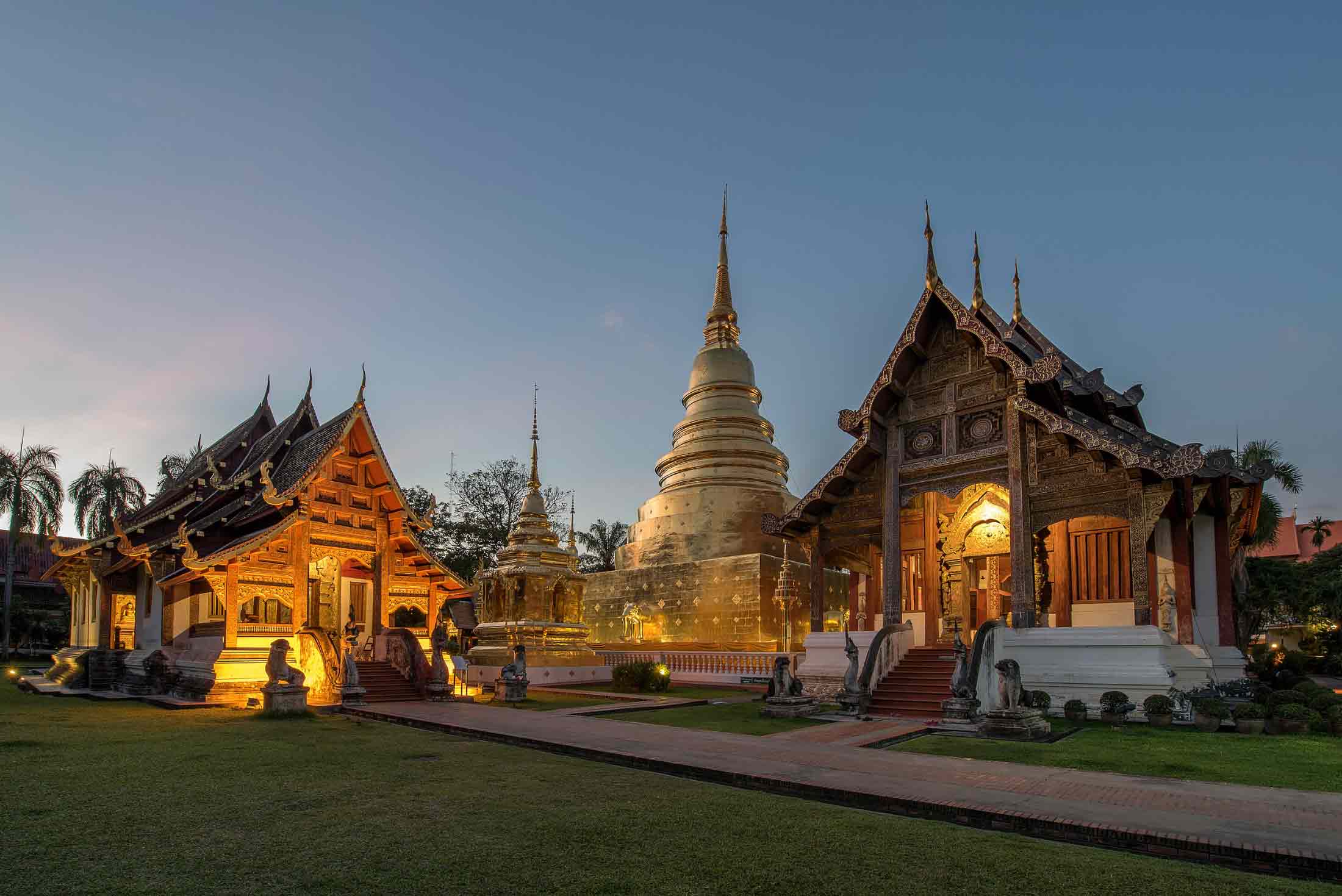
Day 78: Rest day in Chiang Mai
Chiang Mai blends rich history with a laid-back atmosphere, making it an ideal place to pause and recharge. There is plenty to see and do, from visiting the city’s many historic temples such as Wat Phra Singh and Wat Chedi Luang to exploring the vibrant old town with its cafés, markets, and artisan shops.
The rest day also allows time for personal activities such as shopping, enjoying Chiang Mai’s renowned cuisine, or relaxing with a traditional Thai massage or spa treatment. If required, the day provides a convenient opportunity for any vehicle maintenance or preparation before continuing the journey through Northern Thailand.
Day 79: Chiang Mai – Pai
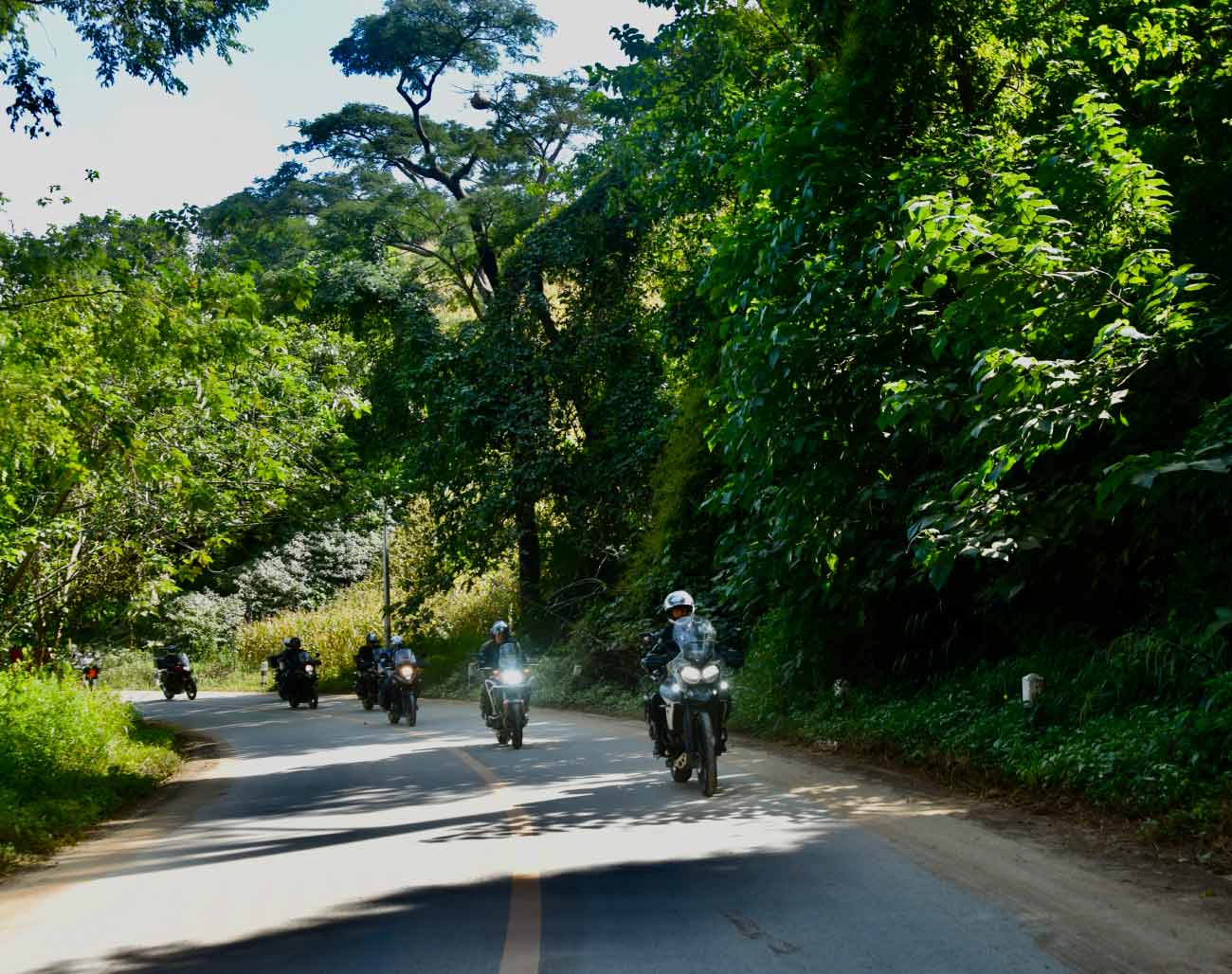
Leaving Chiang Mai in the morning, the route heads north before climbing steadily into the lush, forested hills of Mae Hong Son Province. The road is famous for its seemingly endless curves and sweeping bends, offering an engaging drive. As the road winds higher into the mountains, the scenery transforms into a mix of dense jungle, panoramic viewpoints, and quiet rural villages. Several well-placed viewpoints along the way provide ideal opportunities to stop, stretch, and take in the expansive vistas across the valleys and ridgelines.
Read more
Small roadside cafés and markets offer a chance to enjoy refreshments or a light lunch while experiencing the relaxed pace of life in Northern Thailand. The day’s stage is relatively short, allowing for a comfortable and unhurried travel day. As you approach Pai, the landscape opens into a broad, picturesque valley surrounded by mountains. The town itself has a laid-back atmosphere, with charming cafés, boutique resorts, and a vibrant yet relaxed evening scene. Upon arrival in Pai, there is time to relax at the hotel or explore the town. This stage is less about distance and more about enjoying the ride, the curves, and the stunning natural beauty of Northern Thailand.
Distance: approx. 130 km

Day 80: Pai – Mae Sariang
Our journey from Pai leads deep into the mountains and remote landscapes of Mae Hong Son Province. The route winds through forested hills, sweeping curves, and picturesque valleys throughout the day. Passing through Mae Hong Son, there are opportunities to stop for refreshments and enjoy panoramic viewpoints before continuing south toward Mae Sariang. Traffic becomes lighter and the scenery increasingly remote as we head south. Arrival in Mae Sariang in the afternoon allows time to relax and enjoy the peaceful atmosphere of this charming riverside town.
Distance: approx. 270 km
Day 81: Mae Sariang – Sukhothai
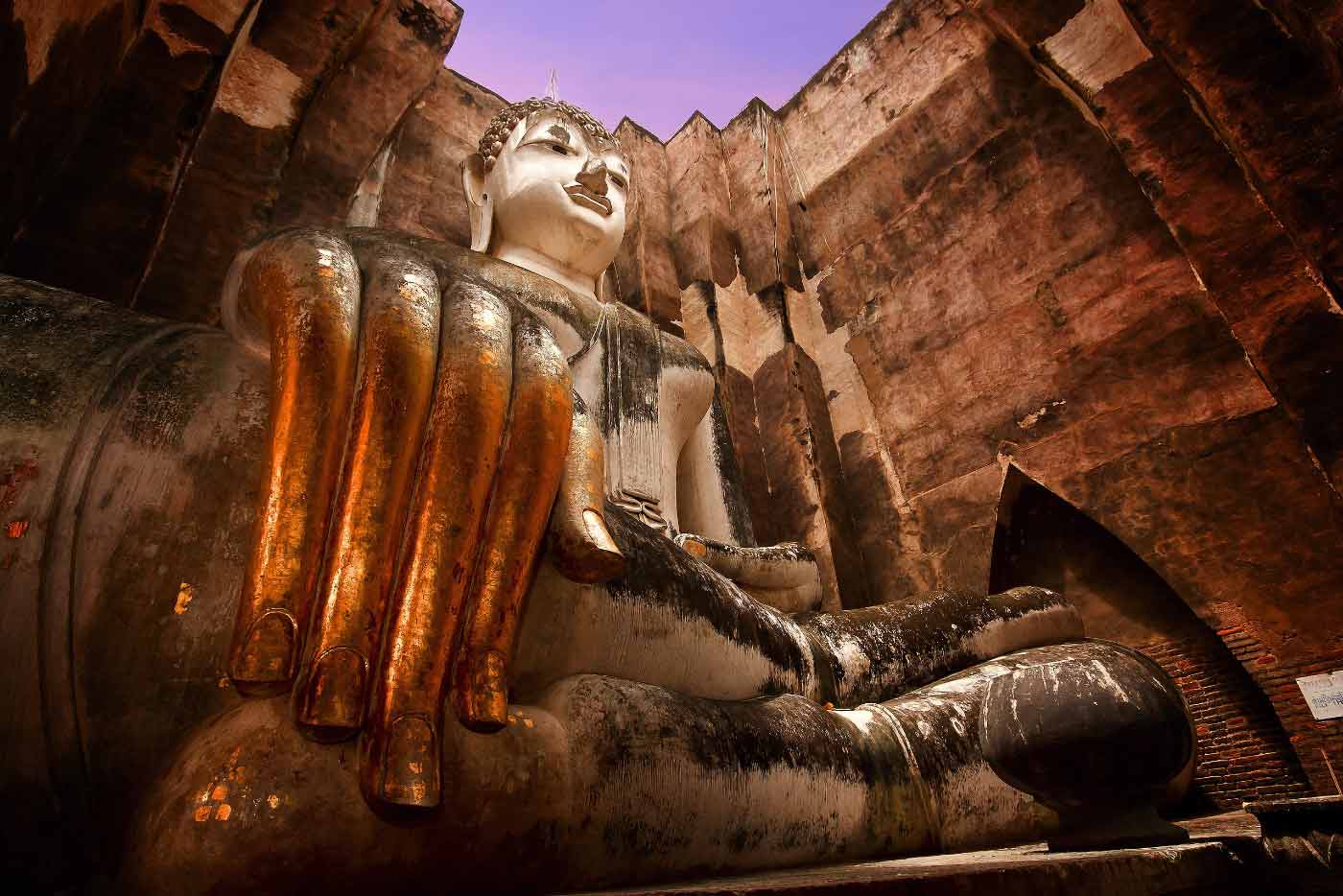
The journey from Mae Sariang to Sukhothai marks a transition from the forested mountains of the north to the open plains of central Thailand. As the day progresses, the mountains give way to wide valleys, rice fields, and traditional farming villages, offering a glimpse into everyday life in rural Thailand. The roads become broader and more flowing as we make our way southeast. Sukhothai is renowned as the birthplace of the first Thai kingdom and is famous for the UNESCO-listed Sukhothai Historical Park, home to impressive ancient temples, Buddha statues, and beautifully preserved ruins.
Distance: approx. 370 km

Day 82: Sukhothai – Bangkok
Our last stretch from Sukhothai to our end destination of Bangkok is one of the longer driving days of the tour, with faster progress made on larger roads and highways as we travel south toward Thailand’s capital. Compared to previous mountain stages, this section is less scenic but allows for efficient travel. The focus of the day is on covering distance comfortably, with smooth riding conditions and regular stops for refreshments and lunch along the way. As we Arrive in Bangkok, we drop off the vehicles at the shipping company and take private transport to our hotel. Thailand’s vibrant capital provides a lively contrast to the quieter regions visited throughout the tour, with its bustling streets, historic temples, and renowned cuisine where we can enjoy the evening to the fullest.
Distance: approx. 430 km
Day 83: End of the trip
The official tour ends today. Alternatively, we have the option of extending our trip individually.

Your Most Unforgettable Motorcycle Adventure is just a Click away!
Book now your Silk Road Motorcycle Tour
Book NOW your “Roadtrip Eurasia Tour – Motorcycle Adventure along the Silk Road!”
Due to the high number of tour requests, you should decide quickly!
Our Next available tours are as follows:
2026
Date 1
Main tour: 30.04. – 17.06.
Extension 1: 16.06. – 23.06.
Extension 2: 24.06. – 18.07.
Date 2
Main tour: 12.06. – 30.07.
Extension 1: 29.07. – 05.08.
Extension 2: 06.08. – 30.08.
2027
Date 1 – Spring/Summer Tour
Main tour: 28.04. – 18.06.
Extension 1: 17.06. – 24.06.
Extension 2: 25.06. – 19.07.
Date 2 – Summer Tour
Main tour: 21.07. – 10.09.
Extension 1: 09.09. – 16.09.
Extension 2: 17.09. – 11.10.
2028
Date 1 – Spring/Summer Tour
Main tour: 27.04. – 14.06.
Extension 1: 13.06. – 20.06.
Extension 2: 21.06. – 15.07.
Date 2 – Summer Tour
Main tour: 09.06. – 27.07.
Extension 1: 26.07. – 02.08.
Extension 2: 03.08. – 27.08.
Date 3 – Autum Tour
Main tour: 28.07. – 14.09.
Extension 1: 13.09. – 20.09.
Extension 2: 21.09. – 15.10.
Silk Road Motorcycle Tour – Included Services
- All overnight stays in hotels with breakfast. Typical middle class hotels and often 4* hotels, especially for double overnight stays. In Tajikistan, Kyrgyzstan and western Tibet, the accommodation is often quite simple.
- English speaking motorcycle tour guide
- Mechanic who accompanies the tour, universal tools, tire repair kit, etc.
- Changing, local country guides for numerous countries who speak the local language and know the culture. These countries include Turkey, Azerbaijan, Kazakhstan, Uzbekistan, Tajikistan, Kyrgyzstan and Tibet/China.
- Accompanying vehicle for luggage and passengers, capacity for a motorcycle in an emergency for a manageable period of time
- Shipping of motorcycles Lhasa – Chinese east coast and Chinese east coast – Hamburg (further transport within the EU possible for an additional charge)
- All official permits for Tibet/Temporary import of a foreign-registered vehicle into China:– Temporary Chinese driving license
– Temporary Chinese license plate
– Deposit for the vehicle at Chinese customs
– Legally required vehicle insurance
– Customs clearance upon entry and exit
– All permits for China and Tibet
– All official translations - State-approved and required Tibet guide (English speaking) from the Chinese border and for the whole of Tibet
- All entrance fees according to the program
- City tours in Istanbul, Safranbolu, Amasya, Bukhara, Samarkand, Khiva, Lhasa
- Flight Lhasa – Chengdu at the end of the main trip
- Hotel parking costs (except Munich for organizational reasons)
- Pamir Highway GBAO permit + special permits for the Kyzyl-Art Pass border
- Support for entry into Turkey, Azerbaijan, the Central Asian states and China
- Motorcycle insurance for Azerbaijan, Kazachstan, Tajikistan, Uzbekistan
- Flight from Tbilisi to Aktau
- All overnight stays in hotels with breakfast. Typical mid-range hotels and in some cities upscale hotels, if available.
- English speaking tour guide with own vehicle.
- Mechanic who accompanies the tour, universal tools, tire repair kit, etc.
- Changing, local country guides for all countries who speak the local language and know the culture. These countries include Laos, Vietnam, Cambodia and Thailand
- Support vehicle for technical service.
- All official permits for Vietnam/Thailand. Temporary import of a vehicle registered abroad to Vietnam and Thailand:– legally required vehicle insurance in necessary countries
– customs clearance upon entry and exit
– all permits for Vietnam, Cambodia and Thailand
– all official translations - State-approved and mandatory Vietnam guide (in English) from the Vietnamese border and for the whole of Vietnam
- Shipping Bangkok – Hamburg
- City tours in Luang Prabang, Hanoi, Siem Reap
- Flight advice Bangkok – Europe at the end of the extension
- Hotel parking costs
- Support for entry into Laos, Vietnam, Cambodia and Thailand
- All entrance fees according to the program
Silk Road Motorcycle Tour – Excluded Services
- Long-haul flight from Chengdu back to Germany
- Gas, lunch and dinner as well as snacks and drinks
- Travel cancellation insurance
- Collection of the motorcycles in Hamburg after return shipment
- Visa fees
- Toll fees
- Vehicle insurance costs
- Flights for the extension(s)
- Vehicle and passenger costs related to the Caspian Sea ferry crossing
- Ferry to Baku approx. 1.100€
Excluded Services
- Long-haul flight from Bangkok back to Germany
- Petrol/diesel, lunch and dinner as well as snacks and drinks
- Travel cancellation insurance
- Collection of the cars in Hamburg after return shipping
- Visa fees
- Toll fees
- Vehicle insurance costs
Question & Answers
Documents to carry (checklist):
- passport with visas
- national driving license
- international driving license
- vehicle documents
- national vehicle registration
- international vehicle registration
- passport photos
- green insurance card
- copies of all documents
In the course of your travel preparations, we’ll send you detailed information on obtaining visas and recommend agencies that will take care of the applications for you.
The tour will be accompanied by a support vehicle that can carry a motorcycle for a limited time in case of emergencies such as technical failures or illness of the rider. It also offers seats for pillion passengers.
The support vehicle can accommodate one carry-on size item weighing up to 10 kg per person. Other items, especially things that you may need during the riding day such as additional clothing, snacks, drinks, etc., are better stored in your cases or waterproof bags on your bike.
The journey is suitable for pillion passengers. Our support vehicle offers a limited number of seats for passengers to use as they please in bad weather or other situations.
In addition to your riding suit, a proper helmet is a must – skull caps and half-shells do not comply with the regulations of the countries we will be traveling through.
Be ready for anything. Packing list for all situations:
- winter liners, long underwear
- rain gear
- winter gloves, summer gloves
- motorcycle boots, winter socks
- comfortable shoes for sightseeing
- balaclava, scarf
- thin down or fleece jacket to wear under your riding suit
- SPF 30+ sunscreen, lip balm
- sleeping bag liner (thin silk sleeping bag)
- first-aid kit and meds
- special tools specific to your bike
- GPS or smartphone cradle on your bike
- waterproof panniers
You won’t need some of these items in the Uzbek desert heat, but you’ll be grateful for them on the Tibetan plateau at over 5,000 meters altitude on a cloudy day.
The journey ends in Lhasa or after the extension in Dali. The motorcycles will be crated and sent to a seaport on China’s east coast, where they will be shipped to Hamburg, Germany, via FCL container freight. Collecting your bike in Hamburg is your responsibility.
The return shipment to Hamburg from the Chinese east coast usually takes 6-8 weeks.
The cost of shipping the bike from Lhasa or Dali to Hamburg is included in the tour price.
You can also ship panniers, top boxes and bags together with your bike.
During the tour, we will be staying in typical middle class accommodations with breakfast. In larger cities, and especially in places where we will be spending two nights, you can look forward to a higher standard. We’re proud of our tour hotels and think that there’s practically no better way to spend the nights on an adventure trip.
In some regions, middle class accommodations are not available. In such cases, we’ll take the best option we can get. There are also some overnight stays in caravanserais. These are settlements in which simple yurts and beds are available to travelers. On some days, we will not have en-suite bathrooms. On a few days, single rooms will be subject to availability. In exceptional cases, we may need to stay in dorm rooms.
Breakfast is included in the tour price, while lunch and dinner are to be paid by the traveler. The prices for meals vary greatly in different countries and regions. EUR 3-10 per main meal with one drink is a realistic average.
Please contact a physician who can prescribe Diamox, a medication that can be taken in advance to prevent altitude sickness in Tibet.
Groups taking Diamox experience little or no symptoms of altitude sickness. For the smooth operation of the tour, your personal health and wellbeing, and for a pleasant travel experience in Tibet, we strongly recommend that you consult your physician regarding Diamox.
We can supply medical oxygen for emergencies from Kashgar onwards.
Tour Concept by RC Hendrik
