




Nepal Mustang Motorcycle Tour – Media Library





Royal Enfield Nepal Motorbike Tour – Questions & Answers
One of the most versatile motorcycle tours in the Himalayas
This route connects in a single journey:
- Eight-thousander panorama (Annapurna & Dhaulagiri)
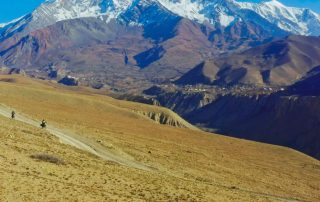
- High Mountain Desert of Upper Mustang
- The Royal City of Lo Manthang
- Centuries-old Buddhist monasteries
- Drive to the Tibetan border
- Jungle Safari in Chitwan National Park
Hardly any other motorcycle tour in Nepal combines high mountains, desert, culture and wilderness in this form.
Drive to the Tibetan border – 4,660 meters
With the Korala Pass we reach one of the highest points in Nepal that can be reached by motorbike. Many tours end earlier – this one continues to the historic trade route between Nepal and Tibet.
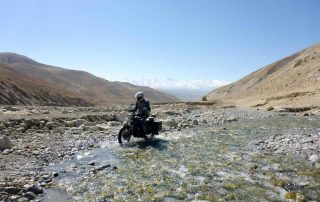
Adventure – but rideable in a controlled manner
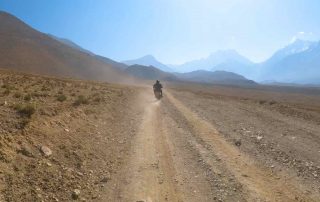
- Approx. 20 % of the tour’s route is considered ‘off-road’
- Mostly asphalted route
- Challenging due to altitude and landscape
- No extreme hard enduro sections
The tour offers real adventure, but remains easy to ride for experienced road riders.
Deep cultural insights
Upper Mustang was closed to foreigners until 1992.
The region preserves to this day:
- Tibetan Buddhist monasteries
- Clay architecture
- Mani Walls
- Nomadic culture
- old royal residences
This trip is not just a motorcycle tour – it is a cultural journey of discovery.
Well thought-out height strategy
The route is structured in such a way that the altitude is gradually increased. This reduces risks and increases comfort in regions above 3,500 metres.
Balanced dramaturgy
- High mountain passes
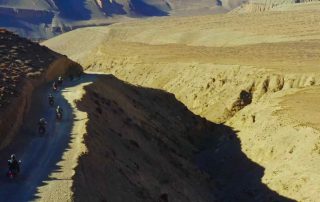
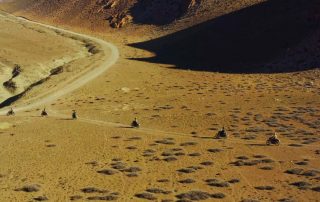
- Sandstone High Desert
- Relaxation in Pokhara
- Hot Springs in Tatopani
- Safari in Chitwan National Park
Intensive driving days alternate with strategically placed recovery phases.
No mass tourism
Upper Mustang is subject to approval and highly regulated. The region is sparsely populated and far less touristy than other Himalayan destinations.
Extreme landscape contrasts
Within a few days you will experience:
- 4,000-meter passes
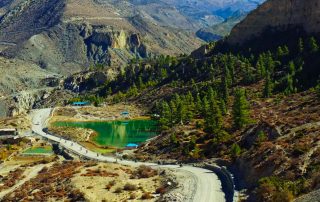
- Deep gorges
- High Mountain Desert
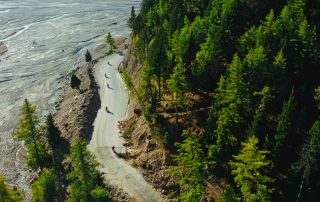
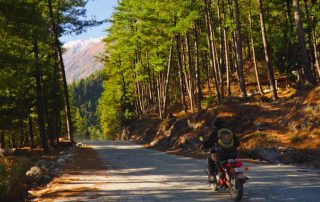
- Subtropical Jungle
This diversity makes the route extraordinary.
- Absolute motorcycle beginners
- People with severe height problems
- Drivers who prefer only comfortable asphalt routes
- Motorcyclists with a thirst for adventure
- Travellers interested in Tibetan culture
- Drivers who want to experience the Himalayas and high mountain passes
- People who are looking for more than a pure asphalt tour
Yes – because of the combination of:
- Eight-thousander panorama
- Tibetan high culture
- High mountain passes
- Desert landscape
- Jungle Safari
- historic monasteries
Hardly any other route combines these extremes into one seamless tour.
Normal fitness is sufficient.
Important are:
- Sufficient physical fitness
- Load capacity at great heights
- good hydration
Partially. The proportion of off-road terrain throughout the tour is around 20%. Most of it is asphalted today, but the character of an adventure motorcycle tour is still preserved.
Upper Mustang may refer to:
- Dry, high mountain desert
- culturally influenced by Tibetan culture
- sparsely populated
- architecturally unique
- historically closed to foreigners until 1992
It feels more like Tibet than classic Nepal in terms of landscape.
Nepal is considered a safe travel destination.
Challenges include:
- Traffic in Kathmandu
- Construction sites
- Changing road conditions
- Altitude
Guided, the tour is very easy to plan.
Between 70 km and 240 km.
At high altitudes, the kilometres are shorter, but more time-consuming and physically strenuous.
- Bengal tigers
- Indian rhinoceroses
- Elephants
- Crocodiles
- Sloth Bears
- numerous bird species
The safari is by vehicle, on foot or by boat – no elephant riding.
- Lo Manthang (former royal city)
- Muktinath Temple (Holy Vishnu Temple)
- Lho Gekar Gompa (oldest monastery in the region)
- Kagbeni (Gateway to Upper Mustang)
- Tsarang with old royal palace
- Boudhanath Stupa in Kathmandu
Upper Mustang is culturally strongly influenced by Tibet.
The route is designed in such a way that the altitude increases gradually.
Overnight stays above 3,500 m will only take place after several days of adaptation.
It is not suitable for absolute beginners.
Suitable for riders with:
- solid road practice
- Experience with curves and high-altitude roads
- Basic understanding of gravel riding
Extensive Off-road experience is not a necessity.
Yes. Citizens of Germany, Austria and Switzerland receive a visa on arrival at Kathmandu Airport.
Costs (current status):
- 15 days: 30 USD
- 30 days: 50 USD
- 90 days: $125
For Upper Mustang, a Restricted Area Permit is also required.
- Highlands during the day: 10–20 °C
- Morning/evening: close to 0 °C possible
- Chitwan (lowlands): 25–35 °C
Large temperature differences are part of the tour.
- March–May: clear visibility, stable conditions
- June–September: Monsoon in the south, Upper Mustang remains comparatively dry
- October–November: best visibility, cool nights
Upper Mustang is located in the rain shadow of the Annapurna massif.
Important highlights:
- Muktinath: approx. 3,700 m
- Lo Manthang: approx. 3,800 m
- Gyu La: approx. 4,077 m
- Shinggel La: approx. 3,870 m
- Korala Pass (optional): 4,660 m
Several stages are over 3,500 metres.
The following are used:
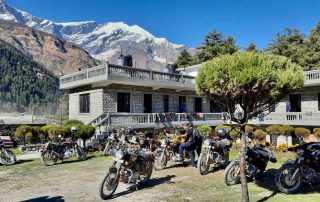
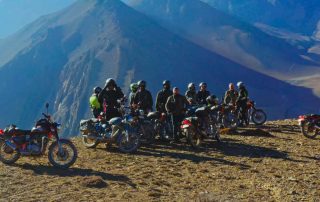
- Royal Enfield Himalayan 450
- Royal Enfield Himalayan 411
- Royal Enfield Bullet 500
These motorcycles are robust, suitable for high mountains and ideal for gravel and Himalayan conditions.
The tour is challenging, but not extreme.
- Most of the route: asphalt
- Off-road content: approx. 20 %, easily passable
- Altitude: up to 4,660 m
- Required: safe road driving experience
The challenge comes mainly from altitude, dust, wind, and long days of riding – not from technically extreme trails.
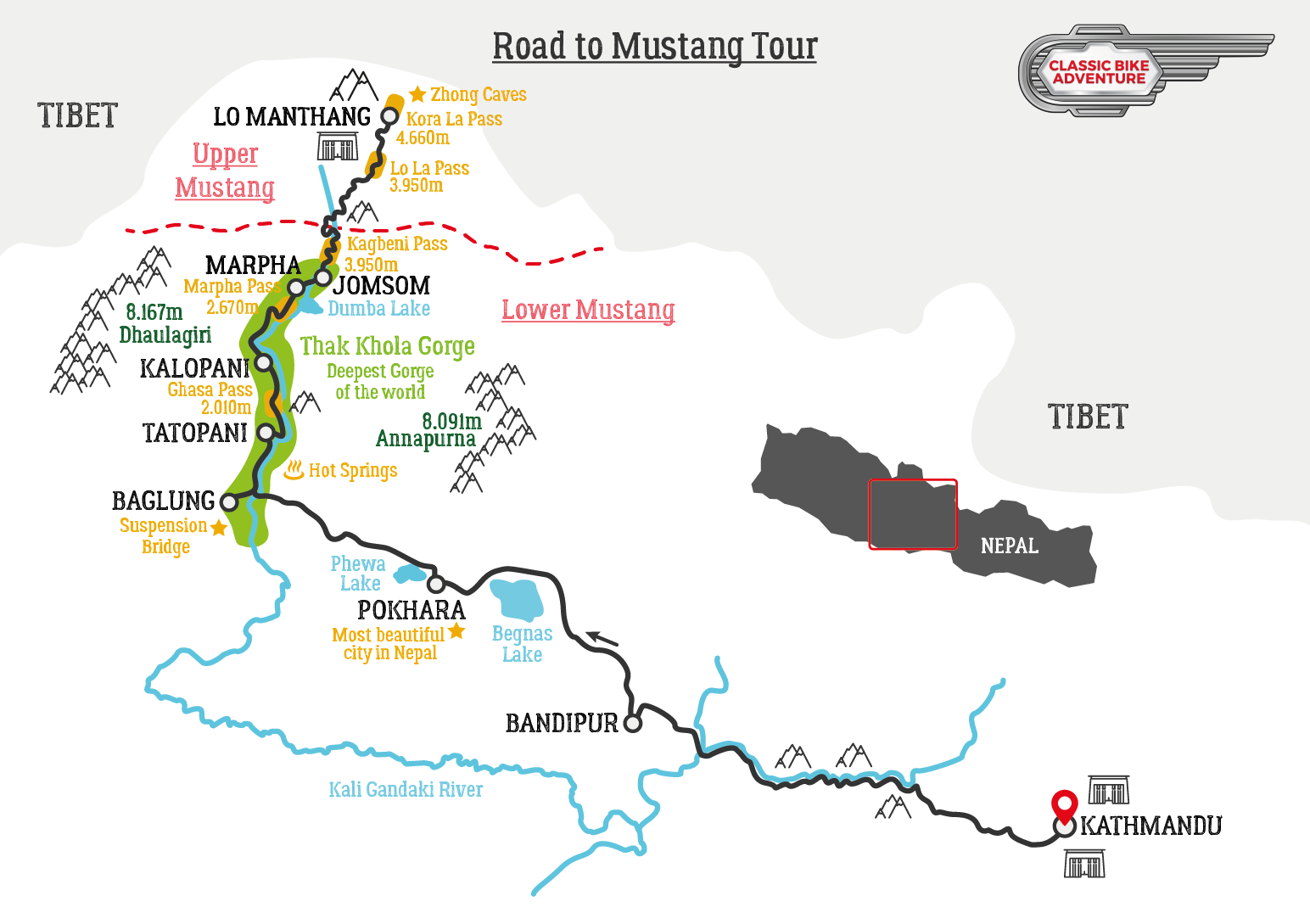
The Upper Mustang motorcycle tour is a multi-day high mountain tour through northern Nepal to the Tibetan border. The route leads from Kathmandu via Pokhara, the Kali Gandaki Valley and Muktinath to the former royal region of Upper Mustang to Lo Manthang and optionally to the Korala Pass (4,660 m). It combines high mountain desert, eight-thousander panoramas, Tibetan Buddhist culture and off-road sections.
A travel day normally begins at 8 am with breakfast. Around 9 am, after a short briefing by the road captain, it’s time for the day’s riding, the mileage of which can vary quite a bit. Plenty of time will be available for lunch and coffee breaks, of course. Depending on the day’s mileage, we’ll reach the destination hotel between 3 and 4 pm.
Since our tours vary considerably, we may also hit the road at 8 am on high-mileage days – which is also nice, because then we have the whole day ahead of us.
Your baggage will be carried by the support vehicle. Please don’t pack too much – remember: less is more. From time to time, we’ll have to carry our baggage over short distances to the hotel. Baggage is not insured, so please be sure to purchase your own baggage insurance for the trip if necessary. Your personal items for the day are best kept in the saddlebags or your daypack. Tank bags – including magnetic ones – can be used on the Enfields, but we don’t provide them.
Simple street maps are often available locally. The best road maps are available from the German publishers Reise Know How and Nelles. These are only available in specialized bookstores or online.
All riders must have a valid motorcycle driving license issued in their home country. An international driving license is also required. Be sure to contact the relevant authorities in your home country well in advance for more information on obtaining an international driving license.
You will need your passport, national driving license, international driving license and flight ticket. Please be sure to make photocopies of all of your important travel documents and carry them separately. They can be invaluable in an emergency.
Our European tour guides are skilled motorcyclists and inveterate travelers who love India. They’re resilient in the face of stress and know the history and culture of the regions they cover. Our Indian mechanics are experienced Enfield specialists who all speak English and are happy to help with any technical problem, great or small.
A stand-in rider is always available. More information on our travel concept is available here.
Groups generally consist of 8 to 14 riders and 2 to 6 passengers. The minimum number of participants is 6 riders.
Yes, all passengers have a guaranteed seat. In bad weather or challenging riding conditions, they can switch to the support vehicle at any time – and back to the bike when conditions improve.
Riding two-up is almost always possible. In difficult terrain or on rough tracks, every passenger has a guaranteed seat in the support vehicle to keep things relaxed for both rider and pillion.
We always recommend that you take out travel insurance to cover costs incurred if you need to cancel the trip due to illness or other reasons. When shopping for travel health insurance, make sure the policy covers the potentially high cost of medical evacuation to your home country. Both forms of insurance can save you a lot of money in an emergency and we recommend them unreservedly. In many countries, your national motoring organization can provide the coverage you need.
You will definitely want to bring your riding suit with protectors and a helmet. You will also need motorcycle boots or lighter riding shoes and gloves. While your gear should be breathable in hot climates, you need to be ready for anything at high altitudes and in the Himalayas. We recommend winter gloves, warm socks, liners for jackets and trousers, a scarf and face protection. Rain gear is a good idea if your riding suit is not waterproof.
Please note that we do not hire out clothing. We believe that your own riding gear will fit best and thus give you the best protection. If you forget anything, we’ll find a solution, however. We often have spare gear with us, or we can point you in the direction of a shop.